When Work Just Gets Tough.
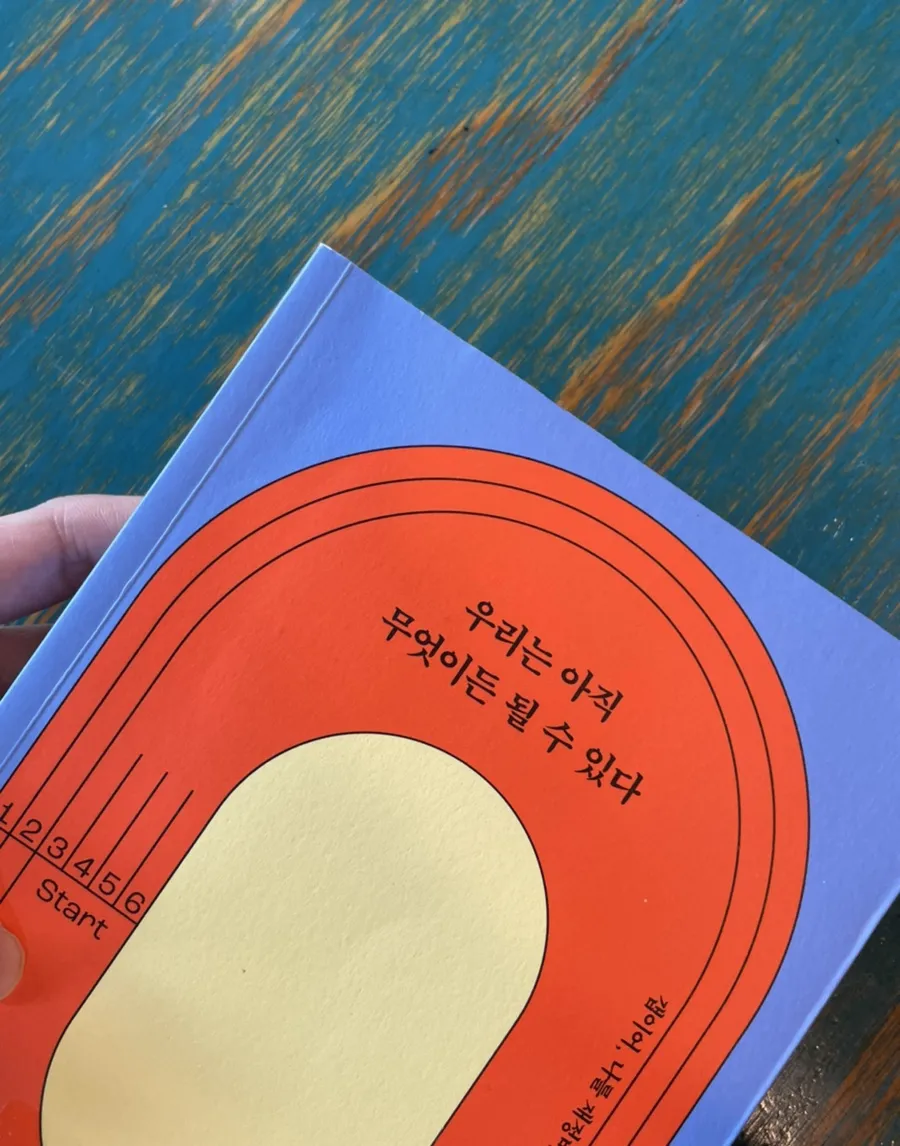
📖 We Can Still Be Anything_Kim Jin-young
3-6-9
Just as there are critical periods in life like ahopsu (a year ending in 9, considered unlucky), there are also turning points in one’s career, often said to come every 3 years, hence the talk of 3-6-9 years.
Having passed 6 full years and now in my 7th, I too have been thinking a lot about my career direction since last year.
My first three years were far from a turning point; I shed my rookie skin and, with boldness and high self-esteem, fearlessly took on projects. Luckily, I achieved good results and enjoyed a recognized career. After five years, I volunteered to take on new challenges, stepping away from my previous work. Now, with a changed environment and a series of new experiences, I often struggle with a significant drop in self-esteem and a feeling of shrinking, as I don’t feel I’m achieving the same level of performance or recognition as before.
I finally read
📝 Thoughts and Sentences I Loved
pg.14
Is the flame in my working heart truly ‘extinguished’? Why did it go out? How can I reignite it? What should I make of this extinguished state? Will this time pass? Can I get better? What does ‘getting better’ mean, from what to what?
pg.39
“The problem isn’t pouring too much meaning into work and identifying with it. It’s about what aspects of work you give meaning to, and what aspects of work you identify with. (Omission) Believe that even if it’s not this job, you can find meaningful work elsewhere, and don’t mistake the success or failure of your work as a reflection of your worth.” - Written by Je Hyeon-ju,
**
Reading this book, I realized that a working person needs various kinds of balance: work-life balance, balance between what you love and what you’re good at, balance between what you want to do and what you have to do, balance between working alone and working with others, balance between putting in effort and taking it easy, and balance between wanting to do well and knowing when to let go. These balances create the physical and mental health needed to do what you love for a long time.
pg.45
The closer the gap between work and life, the more I suffered from the illusion that my life was collapsing, when in fact, only work had become difficult. I felt free when I stepped away from work and realized that the world I stand on, the world that makes me who I am, is quite solid.
**
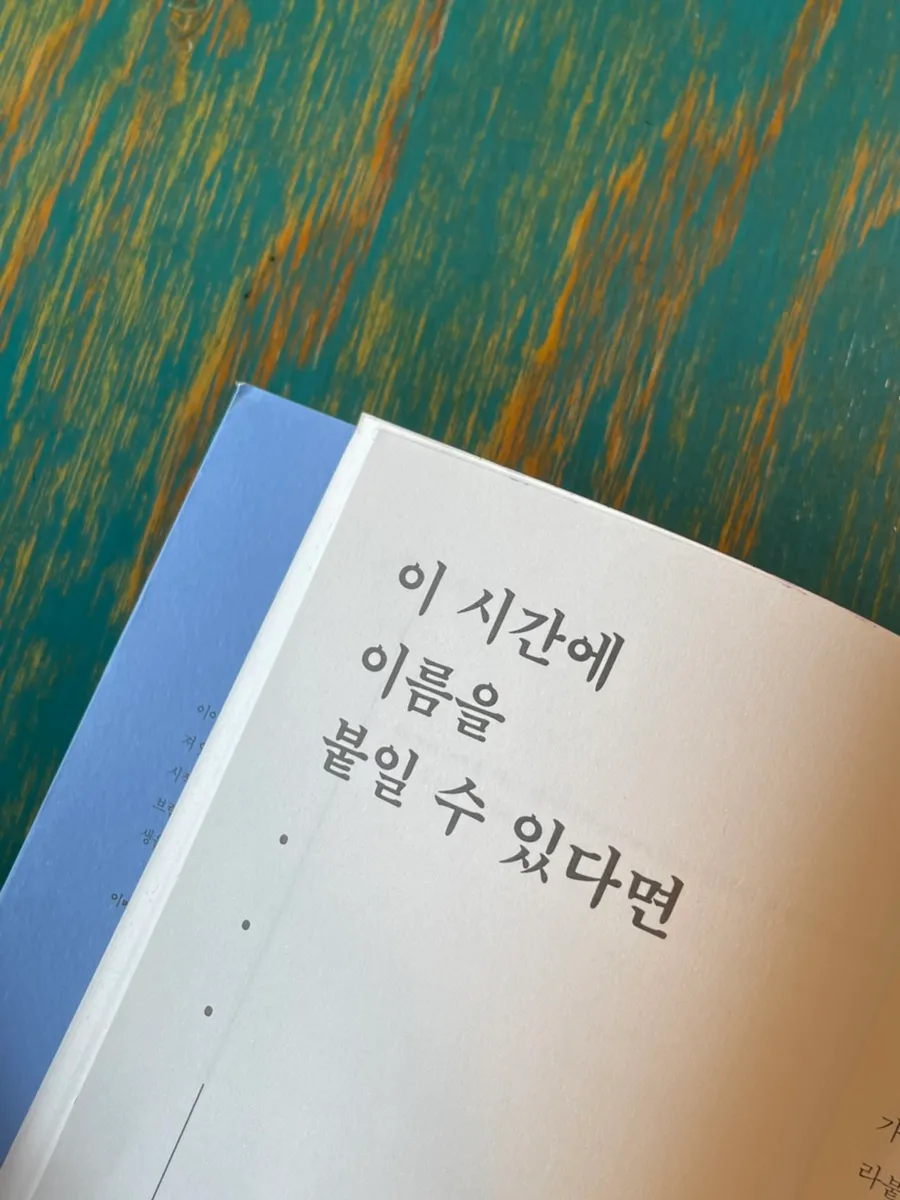
pg.51
Even as years accumulate and work becomes a daily routine rather than an event, there are moments when a switch suddenly flips, and what I do feels special again. These switches remind me of the air on my first day of work, the memory of the first moment I felt I could do this job well, and the feeling on the day I first thought I could do this work for a lifetime. It’s good to create many of your own personal switches when your mind is healthy. Nevertheless, there are times of burnout when none of these things help. For me, the drama
**
It’s effective to collect sentences that help recover your first love for work, your initial feelings, or words of comfort from others, neatly in a small notebook. Comfort has a surprisingly long shelf life; even when you look back at it after some time, the emotions you felt then are rekindled.
pg.57
I once read in a book that the concept of work should include both working hours and rest hours. While on my gap year, I learned how to rest myself, and I felt like I could work again. Thanks to that, I was able to think about a sustainable working life.
pg.112
In Korea, whether it’s work, exercise, or study, we’re taught to ‘do better, to overcome our limits.’ But when I do yoga, if I can’t do a certain pose, they say, “How long have you been doing this pose? It’s natural not to be able to do it. You have to accept yourself as you are.”
**
As my career progressed, I thought I shouldn’t make mistakes or fail. I put so much effort into not falling that when I did, I got hurt even worse. Only after getting hurt did I realize: the competitive edge and pride of someone who has fallen many times isn’t about not falling anymore. It’s the skill of falling well, the resilience to quickly dust yourself off and get back up.
pg.127
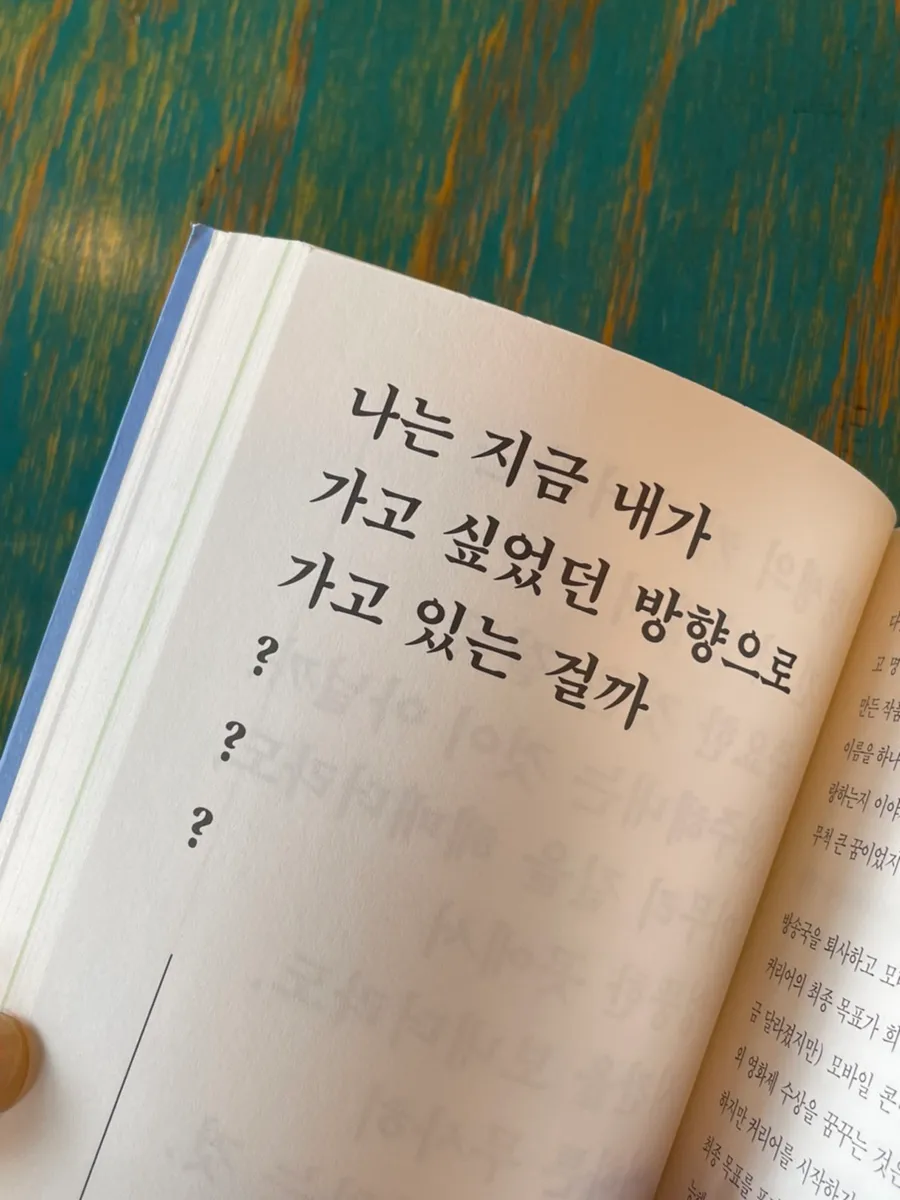
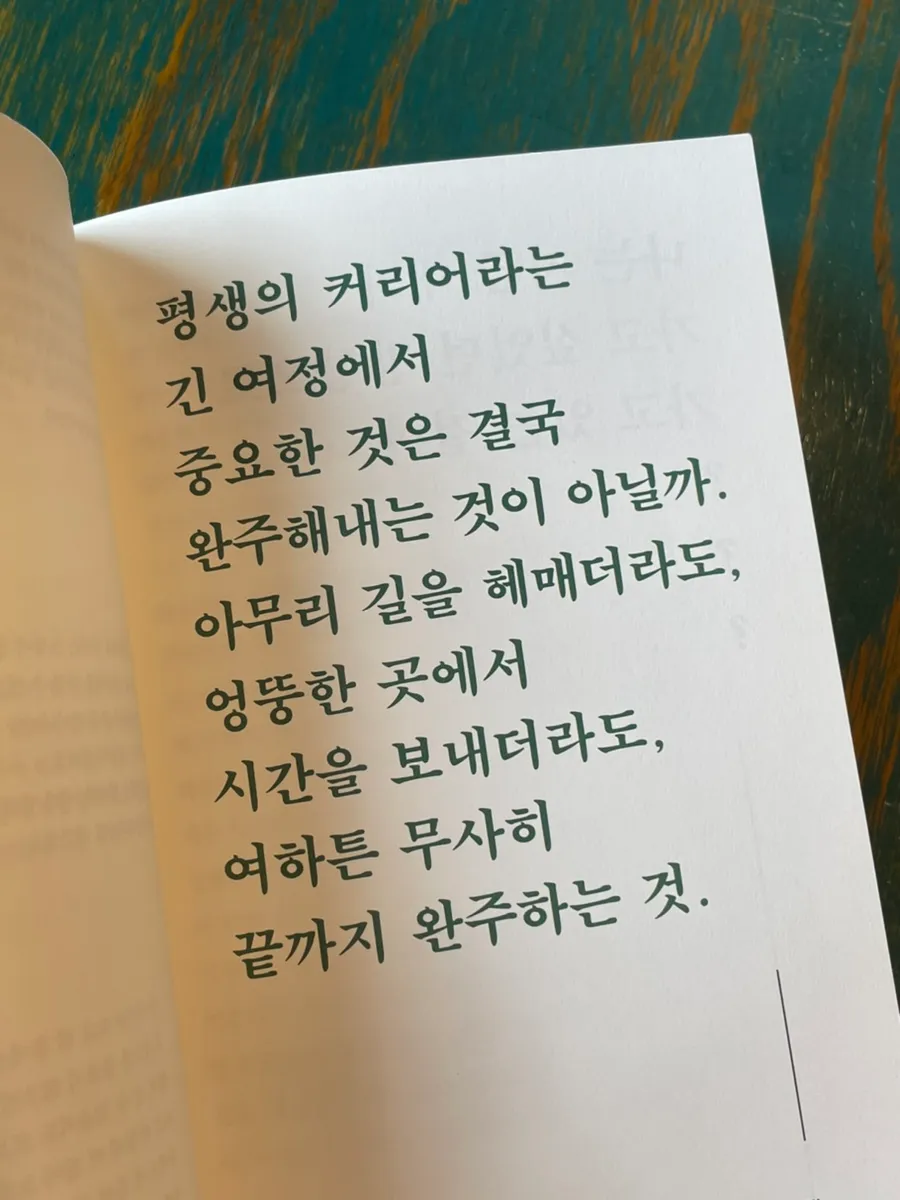
However, I couldn’t give up on the ultimate goal I had held since before starting my career and throughout my working life. For a while, I worked pretending not to know that achieving my goal had become impossible. I worked without a goal, without a target.
**
pg.166
A phrase I found in
pg.183
Looking back, I don’t think I worked 100 percent diligently every day, every hour I spent at the company. If I just managed to get through a month, my salary would reliably come in on a fixed day, but it’s not like that now. If I don’t do something, it becomes zero. Whether it’s income or the meaning of time. Sometimes my husband and I joke, “Are we just drifting downstream on a raft like this?” Our friends keep getting promoted, their salaries increase, and they buy houses. We love our freedom now, but sometimes I suddenly get scared, wondering if we’re actually just drifting away.
pg.185
When I left my job, I chose a gap year because I felt a lack of growth, and I think the reason I might return to an organization after my gap year will also ultimately be due to a lack of growth. When I feel that I need more growth within an organization, I will return to one. Right now, it’s fun to develop my expertise and capabilities as a YouTuber, but I often feel the limitations of being an ordinary individual. It seems there are limits to the relationships and work one can experience as an individual not affiliated with an organization, and those limits will never expand unless I continuously and truly work hard.
pg.201
To focus more on what I’m good at, I had to distinguish between what I’m truly good at, what I want to be good at, and what I mistakenly thought I would be good at.
pg.213
There is inspiration and energy that can only be gained when I step away from the context that always surrounds me and view myself and the world with new senses. This is inspiration that originates purely from me, not from others or from any context already created by society. Such inspiration and energy become the seeds of self-esteem and self-confidence.
pg.239
Compared to my past self, who worked with fervent passion, I often feel a sense of melancholy, as if my energy and capabilities have diminished. Am I ultimately beyond recovery? “It’s not that your self-esteem has lowered; your body and mind have changed in a way that protects you. If your energy, focus, and sharpness aren’t what they used to be, it’s clear they’ve been filled with something else. I, too, sometimes think of my passionate past self and wonder, ‘Can I really live like this?’ But yes, you can live like this.” I often reread these words from my counselor, which I had written in my notebook.
**
pg.244
When contemplating work, it’s most important to think about the essential aspects of what you love doing. As a career progresses, there are many good and difficult moments, making it easy to forget the parts of work you love most due to various layers of experience. Simply rekindling that sense of enjoyment can strip away many incidental factors and lead directly to the essence. Reconfirming the essence of what you love doing also helps reset the target for your work. All the processes of this gap year, which involve recalibrating work and life to reset the work target, are ultimately for the purpose of enjoying what you love for a long time.
pg.246
Most of us want to do what we love not just ‘doing it,’ but ‘sustainably.’ And when we doubt that sustainability or face an unsustainable situation, we can experience burnout. To reset the target for my work through work-life recalibration, it’s necessary to identify what elements make what I love doing ‘sustainable.’ And the factors that allowed my past self to enjoy work might be different from the factors now. Even if you face elements that make you feel ashamed or disappointed in yourself, let’s reflect on them as honestly and thoroughly as possible.
pg.249
Ultimately, what we need isn’t new stimulation, but a rekindling of the feeling of joy we once had for what we love doing.