The Process of Building Self-Trust
📖 Jeom_Kim Hyun-jung
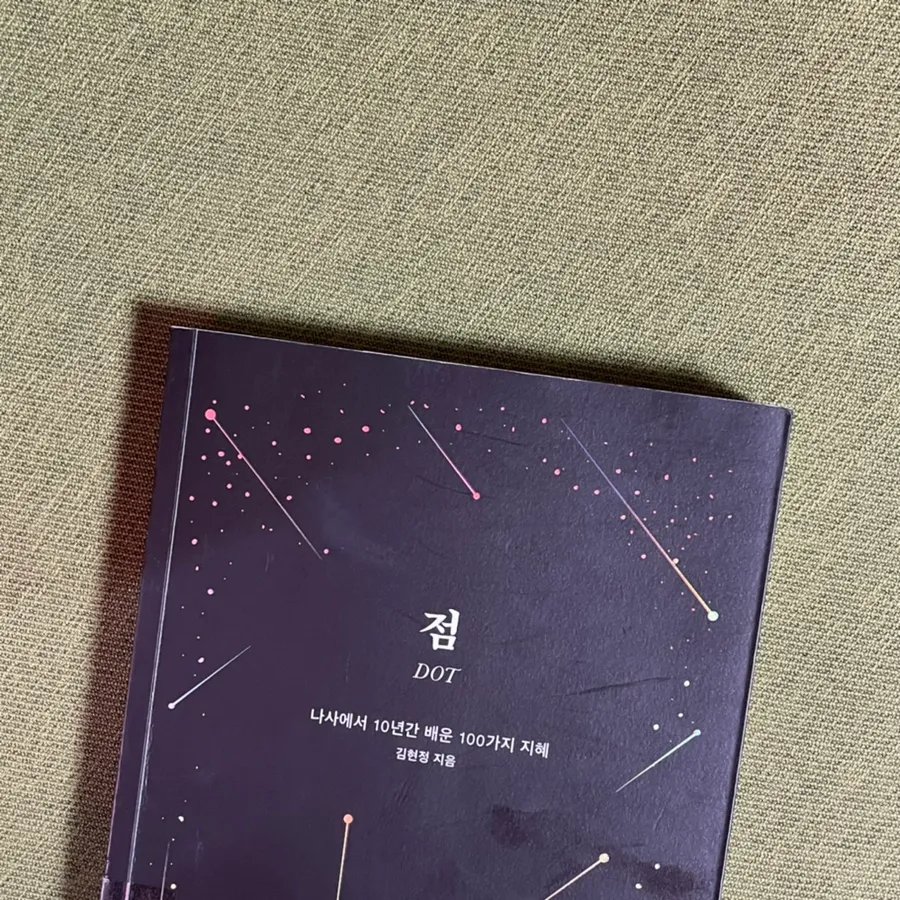
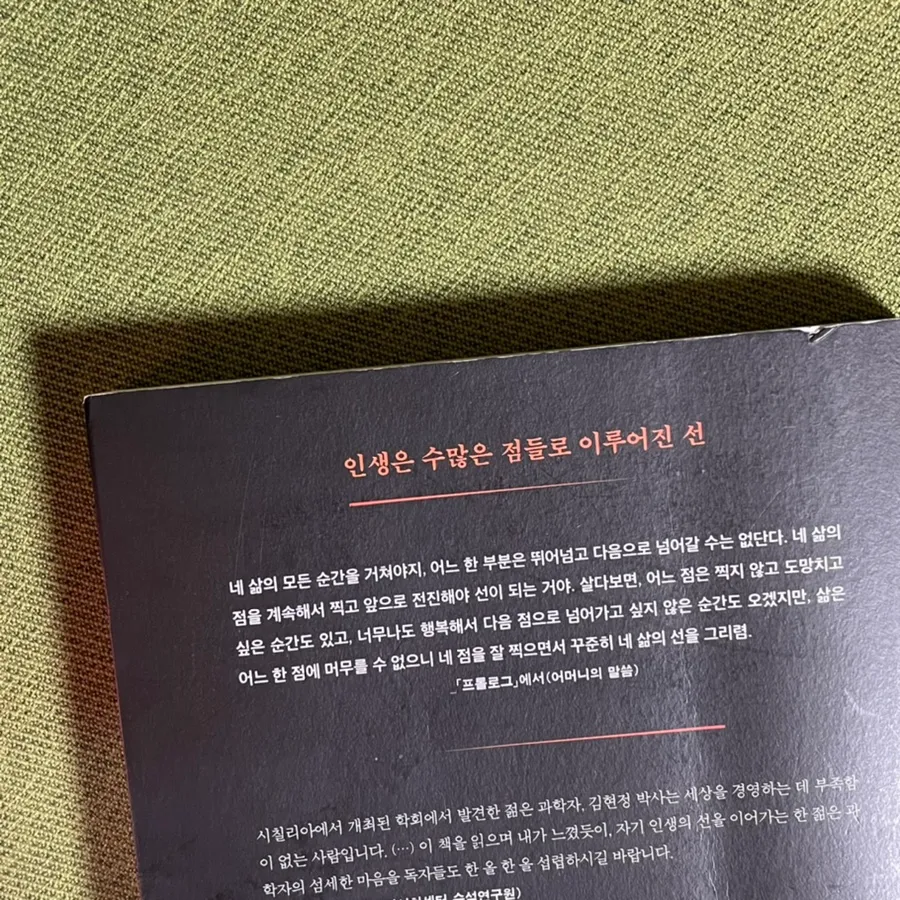
Watching the scientists in the movie <Don’t Look Up> grapple with work concerns on a cosmic scale (though the planet-collision plot is fiction), and seeing the awe-inspiring space photos periodically released by NASA, my respect for those working in space-related fields grew immensely. Along with that, a feeling that my own work was utterly trivial began to surface.
Yet, strangely, as I read Dr. Kim Hyun-jung’s wisdom diary, chronicling her insights from 10 years at NASA, I discovered that her stories resonated with my own workplace experiences and dilemmas. The workplace of the universe, operating on a scale of hundreds of millions of light-years, and the workplace of a tiny sector within the pale blue dot (Earth). Though their size, form, social impact, and ripple effects may differ, a workplace is still a workplace. In this small career slump I’m currently experiencing, her wisdom diary illuminates a path where I can turn my weary steps, rest for a while, and then return.
📝 Thoughts and Sentences I Loved
pg.19
‘It would be better to do nothing at all. That way, I wouldn’t make such foolish mistakes.’ The moment I thought this, as if sensing my feelings, my boss advised me, “The fact that you made a mistake means you’re working hard, and it’s my role to help you with your mistakes.” He added, “A fast-running horse faces more resistance than a slow-running one, so it’s more likely to stumble.”
pg.49
If you want to work somewhere you desire for a long time, strive to become an indispensable person for the team and organization first. Also, if the place you applied to doesn’t need you, don’t blame yourself by thinking ‘my skills aren’t good enough’; it simply means you’re not the role they need there.
pg.55
Ideas are gained from the various texts I read and conversations with many people. Inspiration is found in countless everyday actions, like casually stepping into a new alleyway, and a mindset open to accepting any idea is necessary.
For a moment, put ‘work’ down and rest, letting ‘thoughts’ flow freely. A new idea that could change the world might come to you. By giving yourself time to rest, you provide an environment for inspiration, and cultivate a mindset that accepts and welcomes ideas as they come. In that sense, gaining inspiration is like ‘rest.’ It’s exciting, naturally springs from the heart, comfortable, happy, tireless, and steady.
Open your mind to welcome ideas, and offer them a playground.
pg.76
‘Coldness or warmth are tiny, invisible particles that move and transfer heat. So, even if ice cream doesn’t get on your hand, it can make the ice cream warm and your hand cold. Isn’t that amazing?’
pg.79
Nothing can be concluded as just ‘success’ or ‘failure.’ Too many factors influence the final outcome, and even fate can be fickle. Even the most talented athlete doesn’t win every game. Perhaps the true winner is the player who goes out on the court, enjoys themselves, and gives their best in every match. By shifting my mindset from ‘results’ to ‘process,’ I’ve been able to enjoy every moment.
pg.82
Looking back at my school days, when asked about dreams or future aspirations in Korea, everyone would ask and answer with ‘professions’ like doctor, lawyer, or president. But for me, a dream is not simply a job. My dream is a ‘verb,’ not a ‘noun.’ And as a ‘verb,’ my dream is as bright and clear as anyone else’s.
If ‘dream’ is treated as a noun, nothing happens, regardless of its size. A dream is a ‘verb’—to chase a dream, to dream a dream, to paint a dream—so it must be acted upon and moved towards to be realized.
pg.98
If you remove ‘self’ from the English word ‘self-confidence,’ only ‘confidence’ remains. Self-confidence is the process of building trust in oneself. When you trust yourself, you can gain trust from others, and the trust gained from others nourishes your own self-trust. Through this cyclical structure of trust between oneself and others, we gain, find, and restore self-confidence.
pg.161
What kind of person do I want to work with? To put it simply, it’s someone who provides appropriate acknowledgement and support to each individual working on a project to lead it to success. Support and acknowledgement stem from ‘respecting’ the other person. When working, there are many people who silently support tasks from behind the scenes. Because their efforts are not always visible, someone who understands the overall situation must request acknowledgement and support from the final person in charge to reward their hard work. In the workplace, acknowledgement and support are expressions of gratitude.
pg.178
If you have a question, don’t hesitate to ask it.
Just as there are no right answers in the world, there are no wrong questions. That is the greatest questioning skill I’ve learned. If you’re curious about something, don’t just pass it by; ask immediately.
Asking questions is a privilege granted to those who listen. There is no perfect timing to ask a question. You must find and create the time to ask. (omitted) Let’s make sure we don’t fail to ask questions by only thinking about ‘good questions’ or searching for ‘perfect timing.’
pg.188
I was advised that when small things accumulate, amazing results are achieved before you even realize it. For me, who expected ‘instant’ success, there was meaningful advice to ‘look big and wide.’ Because I was hoping for a ‘one-shot’ success, all my attention was focused solely on the outcome. Working result-oriented meant I was repeatedly just making plans every day. (omitted) By pouring all my energy into a ‘one-shot,’ I was forgetting the small successes gained during the process of work, and missing out on the current small successes and the joy of the journey.
pg.204
Work should be done diligently when it needs to be done and when you are able to do it. Thinking about work when you can’t do it doesn’t make the work disappear. So, when you can’t work, or don’t need to, rest completely and comfortably.
pg.209
I once had an interesting conversation with my mom about ‘what kind of person should be a leader.’ Our conclusion was that ‘a person who has no significant regrets or lacks nothing should be a leader.’ Someone who is reasonably happy, has a reasonable amount of money, is reasonably educated, and has enough of everything so that they don’t deeply lack anything should become a leader. If someone with many deficiencies gains power, they might abuse their public position by any means necessary to fill those deficiencies.
pg.245
A leader guides team members in the direction they indicate and moves forward with them. A leader provides direction with insight and foresight, and walks alongside team members, assisting them to draw out abilities beyond what they themselves believe they possess. A leader is different from a boss who merely dictates the direction the team should go.
The leaders I observed at NASA preferred to be facilitators rather than decision-makers. That is, leaders teach those they work with how to work, and help them to work and make decisions in their own ways. They help team members ultimately make all decisions themselves, to have faith and courage, and to overcome their own limitations. Even if a leader demands more than my currently confirmed abilities, it is a judgment of my potential, and based on this, the team can achieve its goals.
pg.256
The expression ‘being on the same page’ is said to have originated from ‘choir singing.’ If each person is looking at a different page of sheet music, they can never complete one song. Only when everyone is on the same page, looking at the identical sheet music, can they create a complete piece of music with one voice.
pg.279
A friend advised me to create many specific ‘things that make me happy’ and put them in a ‘pocket.’ And then, to take them out one by one, like candies from that pocket, and “eat” them frequently. To become happy by “eating” these ‘things that make me happy.’ The candies in my ‘pocket’ are, for example, these:
The time spent writing in my diary at a coffee shop after a run on a quiet path on a weekend morning. And a cup of fragrant coffee. A single line from a book I randomly picked up at a bookstore that already makes me anticipate the next. And a book I bought and immediately sat on the bookstore floor to read until the last page. Laundry neatly hung in the backyard on a sunny June day. Watching people departing or returning in an airport lounge. Research discussions with someone I connect well with.
All of these are the candies I often take out and “eat,” the moments that make me happy.