[Interpretation Grad School Prep for Office Workers] My Podcast Study Method
Tied to the office 5 days a week, I prepared for the interpretation grad school entrance exam as efficiently as possible with my own English study methods.
If my last post was about studying using newspaper articles,
this time, rather than a podcast ‘study method,’ I want to reveal my personal routine for immersing English into daily life..!
hoxy,, for those who haven’t seen my post on studying with newspaper articles…
 ](https://blog.naver.com/about_thesame/223275863353)
📌Selecting and Subscribing to Podcast Channels (Weekdays: 5 / Weekends: 3)
I’m currently subscribed to a total of 8 channels.
Here’s my daily podcast routine, listed in the order I listen:
Weekdays (Daily Basis):
On my morning commute
- The Wall Street Journal : Minute Briefing
- Wall Street Breakfast
- TED Talks Daily
- CBS Morning News [Nyuseussok:Sok]
During my evening shower 5) Sone Japineun Gyeongje
Weekends (When I have time on Sat/Sun):
- 6 Minute English
- CNN One Thing
- Korea Herald Podcast
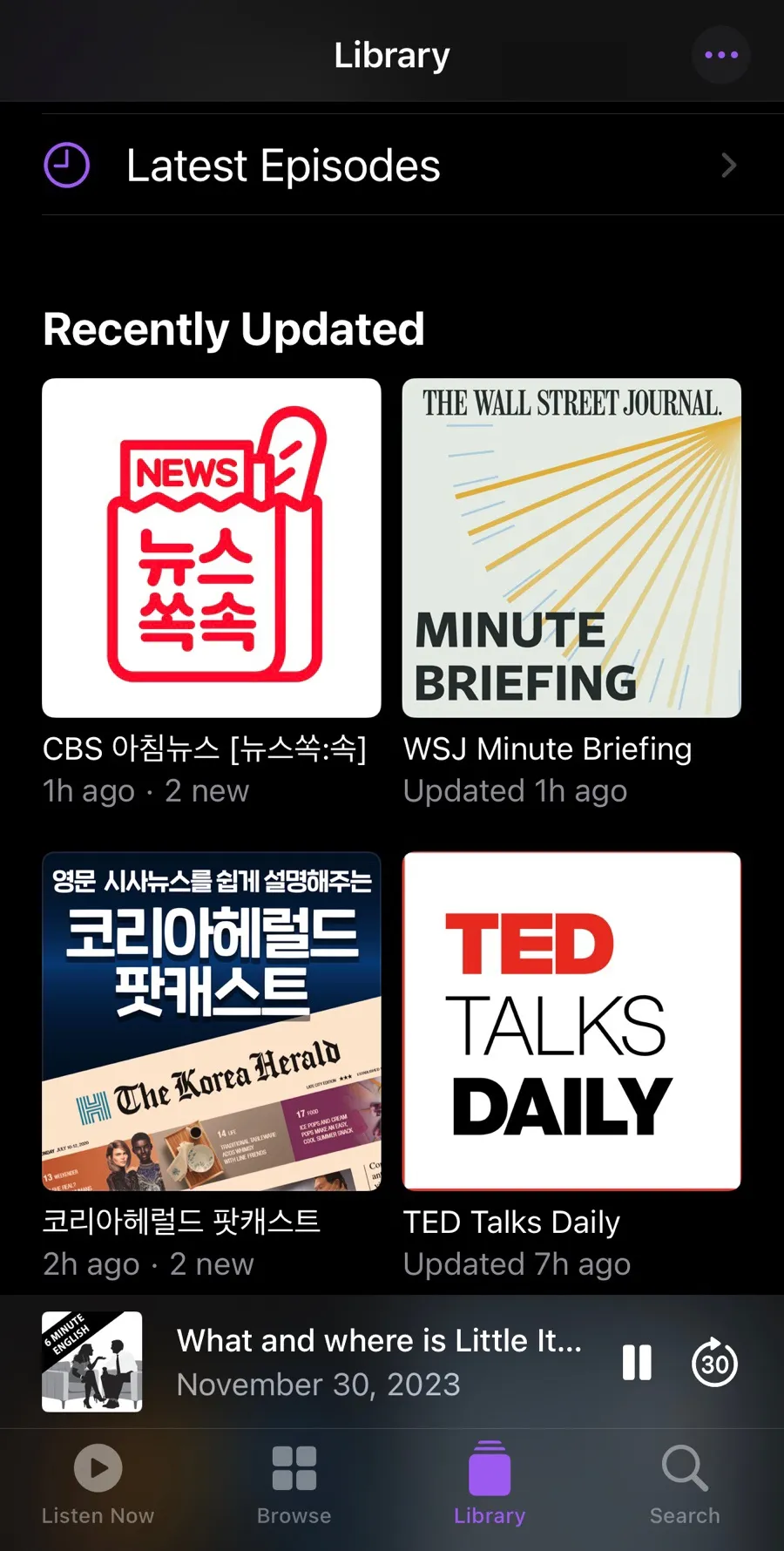
[Weekday Routine]
📌 WSJ - Minute Briefing
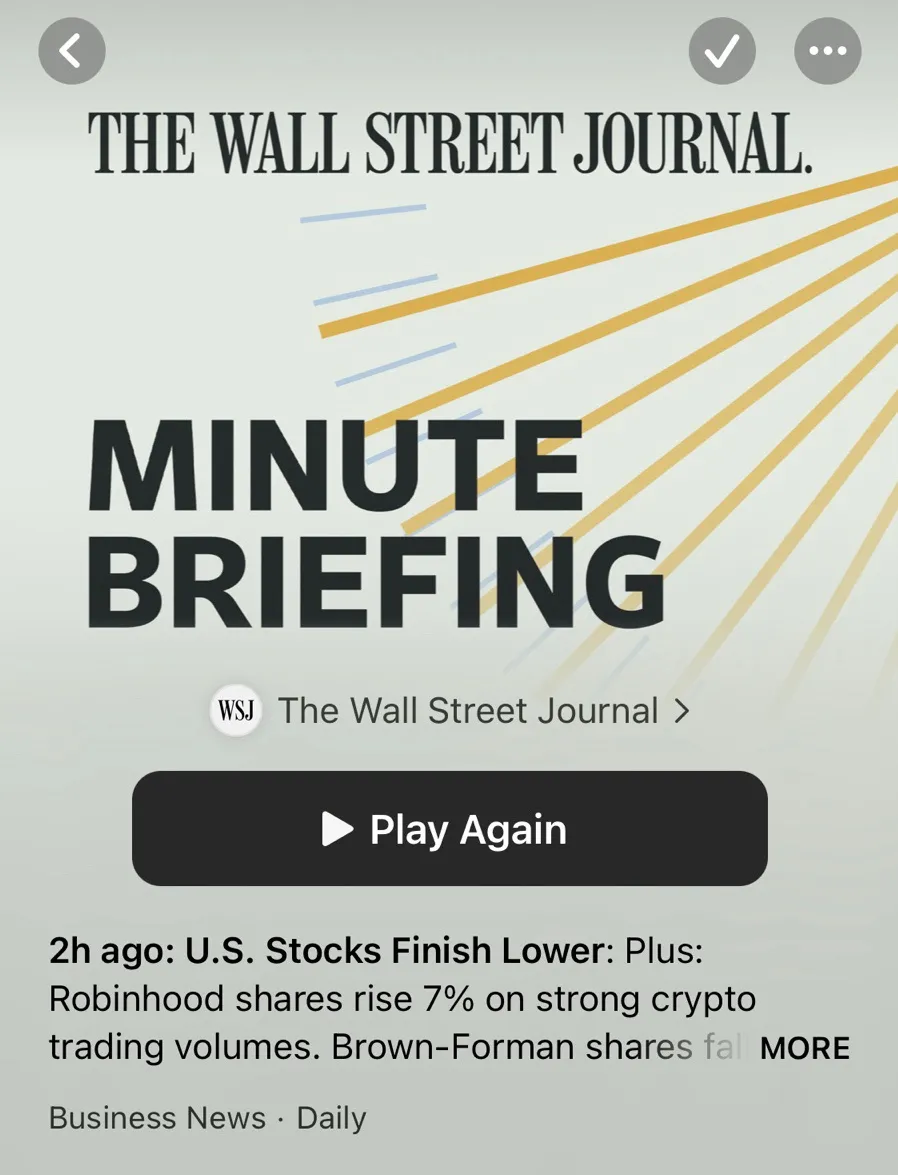
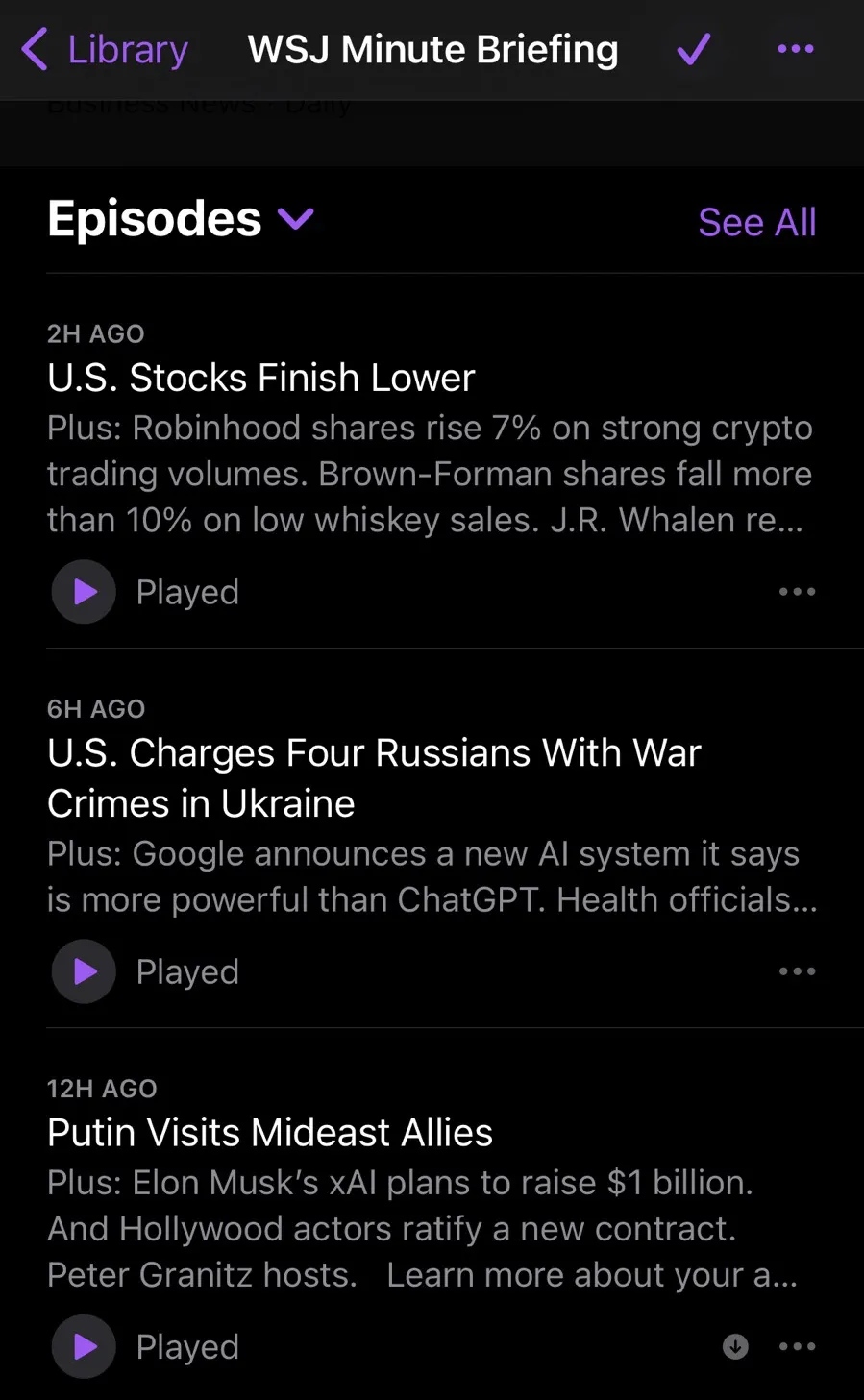
This is the first channel I turn on when I head out for my commute. The Wall Street Journal provides three concise economic/world news updates, each 2-3 minutes long, every weekday. Listening to all three sets takes less than 10 minutes, making it a great, low-pressure way to ‘warm up’ my English listening skills at the start of the day! Haha. By the way, due to the time difference with the US, I’m listening to the previous day’s news.
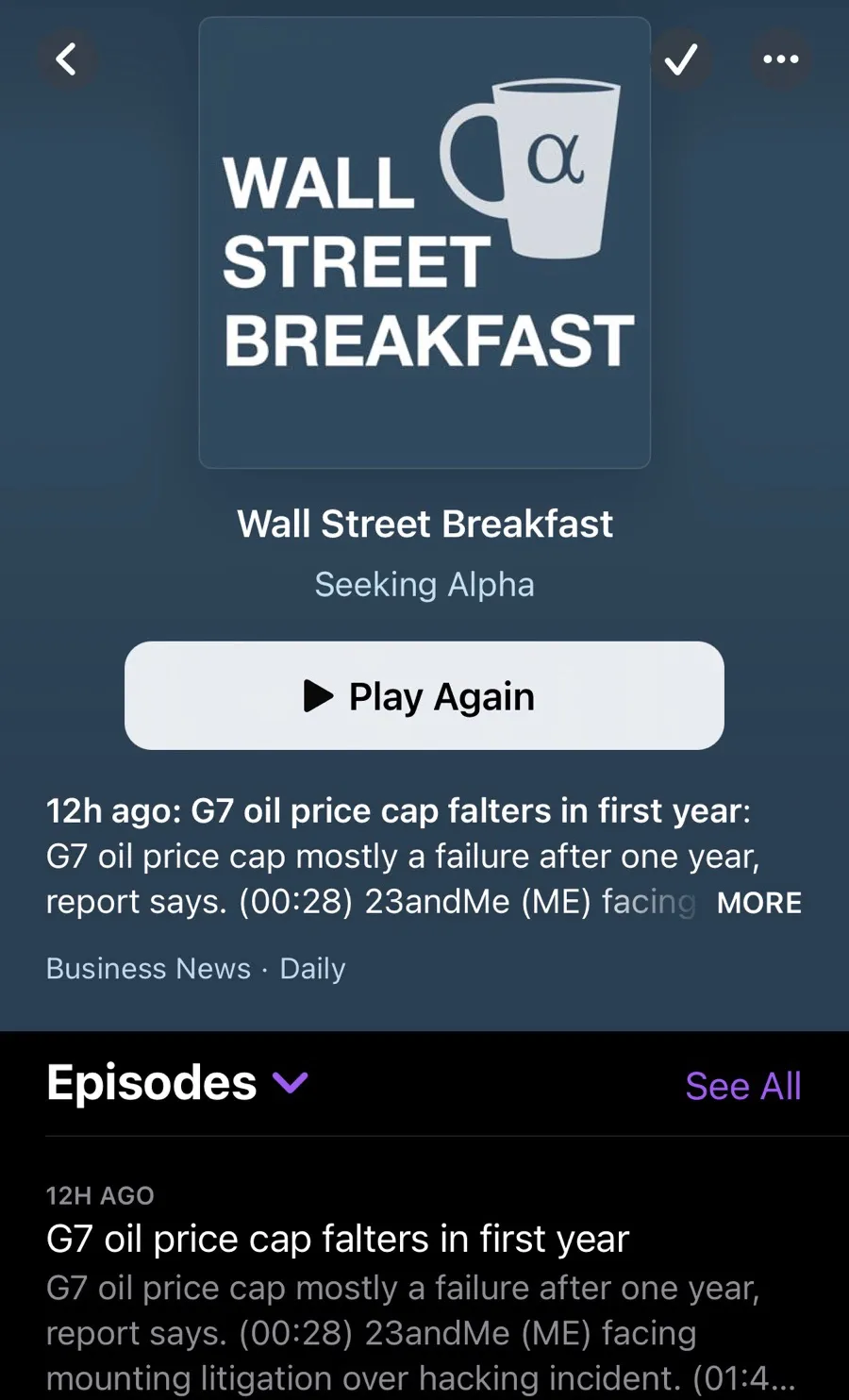
📌 Wall Street Breakfast
This channel often covers topics that overlap with the Minute Briefing I just listened to. Two sets are uploaded daily, and each set is usually about 6-8 minutes long. It’s helpful because it delves a bit deeper into the overlapping topics. It’s also fun to discover how a single topic can be expressed differently and what terminology is used! It has a slightly stronger economic focus than the Minute Briefing. (It recites the previous day’s major stock indices daily.)
📌 TED Talks Daily
After listening to somewhat serious and rigid economic news,
it’s time to cleanse my ears with some softer, more interesting content – the popular TED Talks! Experts deliver lectures on a truly diverse range of topics – science, society, nature, psychology, medicine, religion, and more – many of which I’ve never encountered before, and they’re quite moving and captivating! I listen to one set on my commute, and it’s usually around 15 minutes long.
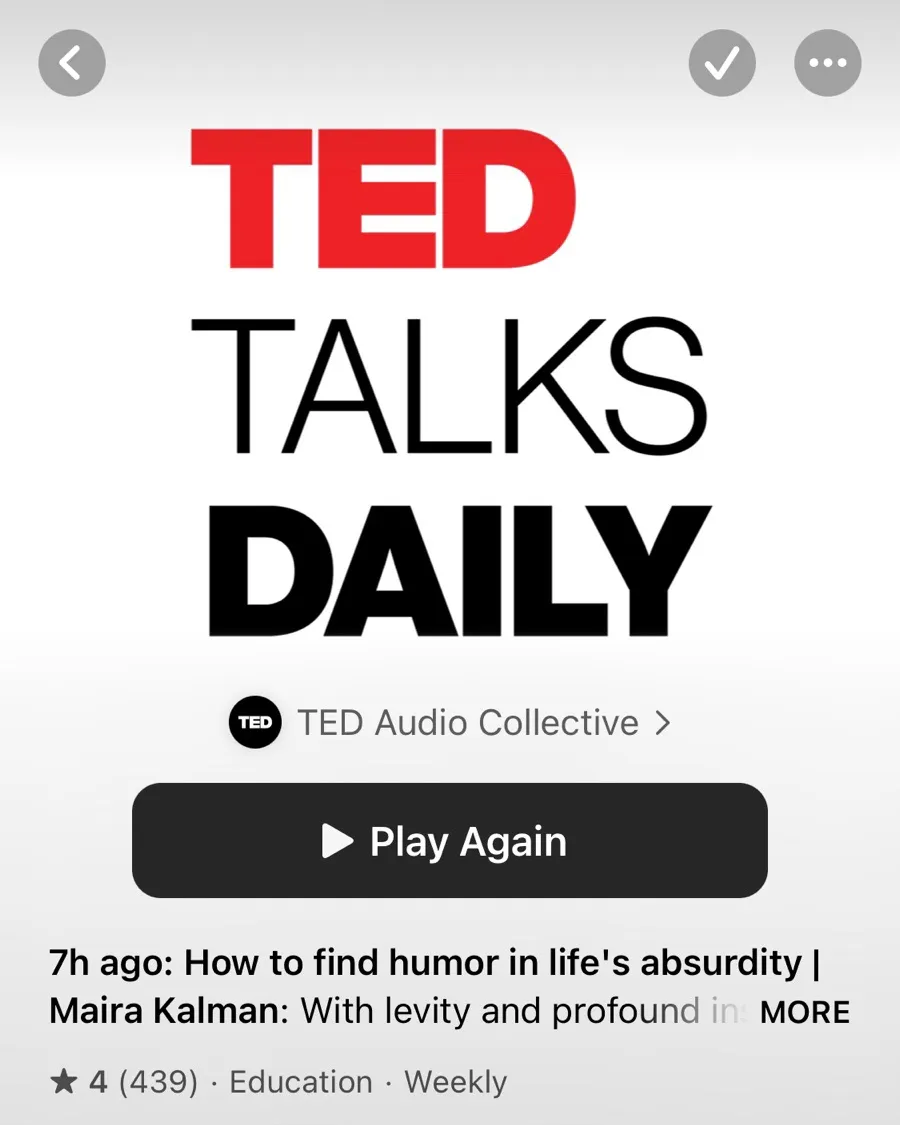
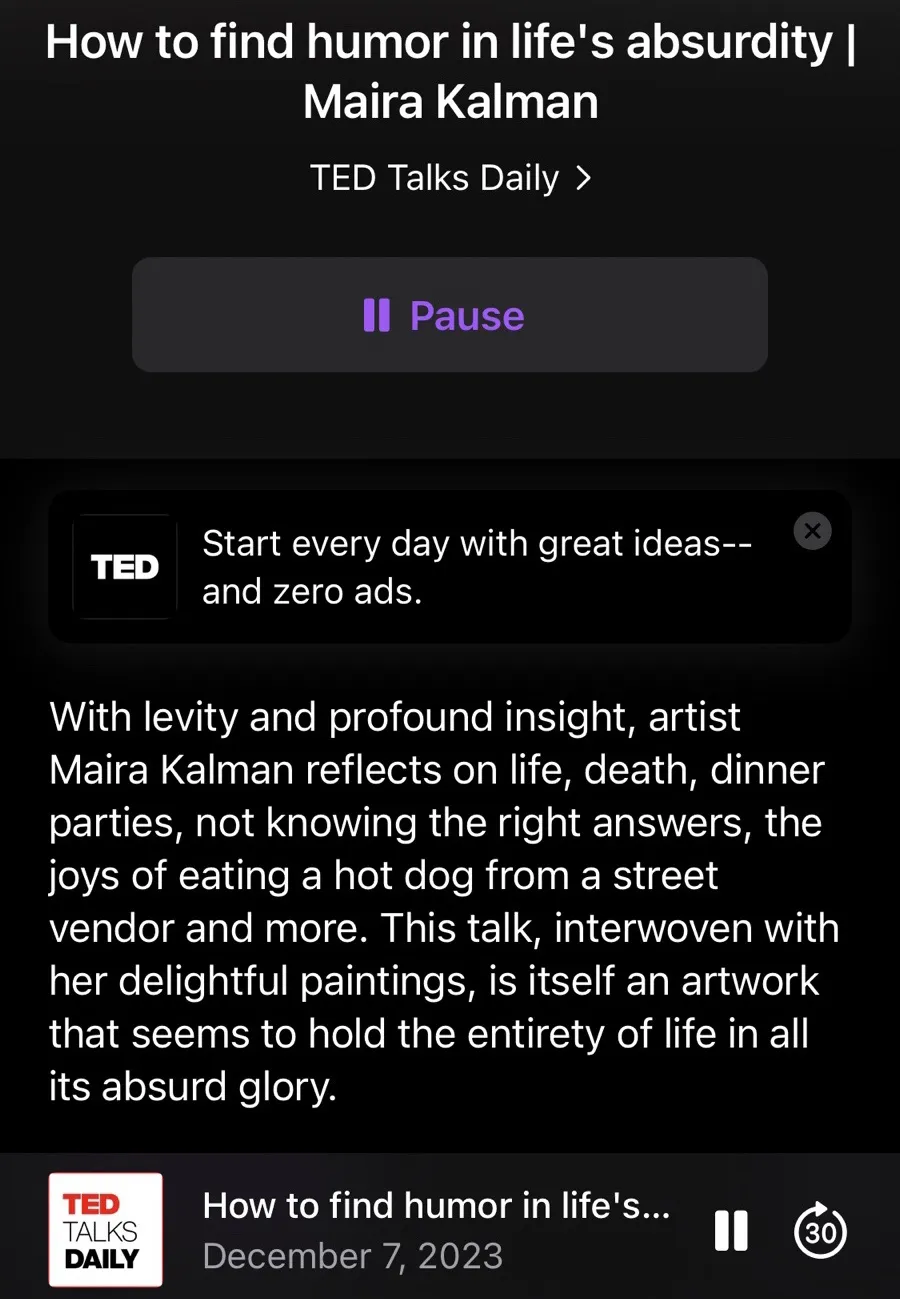
The recent lecture I heard, “How to find humor in life’s absurdity,” was totally my style-ㅋㅋㅋ I had such a hard time holding back laughter on the subway… Good thing I was wearing a mask. Listening to these lighter lectures is also very helpful! Especially, you learn how humor is handled and expressed, and from good speakers, you also learn phrases that captivate an audience.
📌 CBS Morning News [Nyuseussok:Sok]
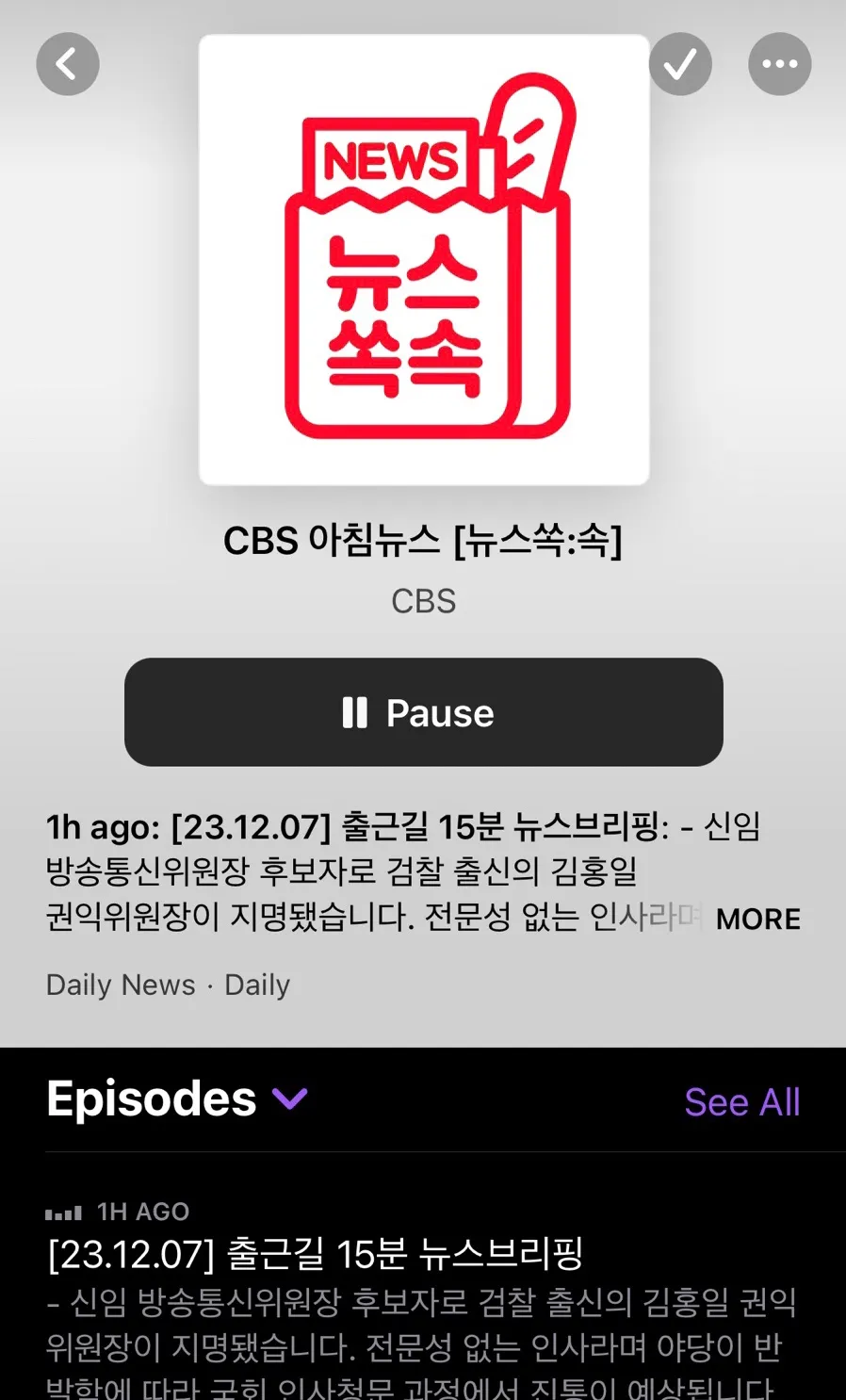
World news is important, but I can’t miss domestic news either! I listen to CBS Morning News because I think they deliver relatively well-organized news, and I like the announcer’s tone. One episode is uploaded every morning, and like TED, it’s about 15 minutes long. It’s nice that they even tell you today’s weather at the end of the broadcast-
Listening up to this point takes about 40-50 minutes, which is the perfect routine for me, as my door-to-door commute from home to work takes about 1 hour and 15 minutes,,, (My office is really far… How did I commute for 8 years, seriously… It’s crazy.) I also really-really-REALLY love listening to music, so as soon as the podcast routine ends, it’s music ON!!! 🎶🕺🪩
I ‘cleanse my ears’ with music for the rest of my commute lol.
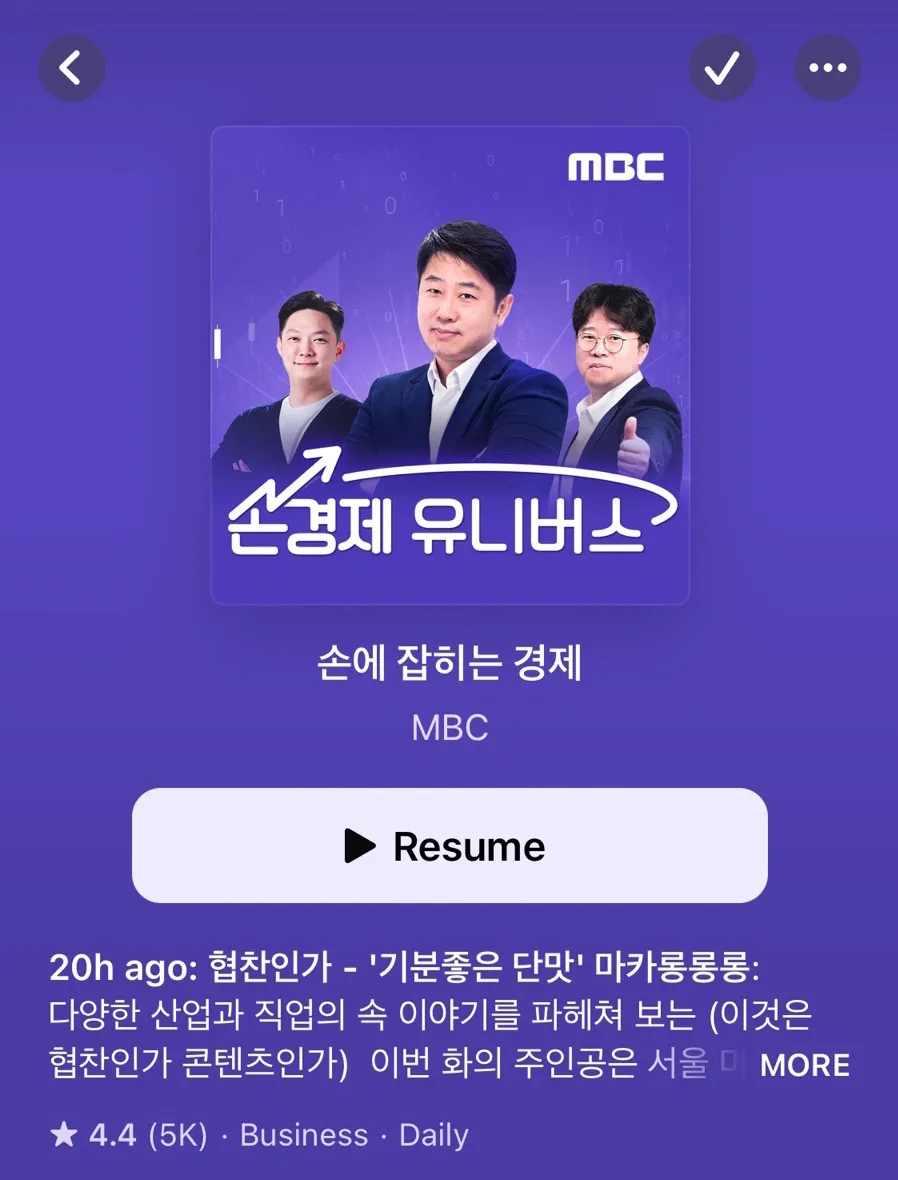
📌 Sone Japineun Gyeongje
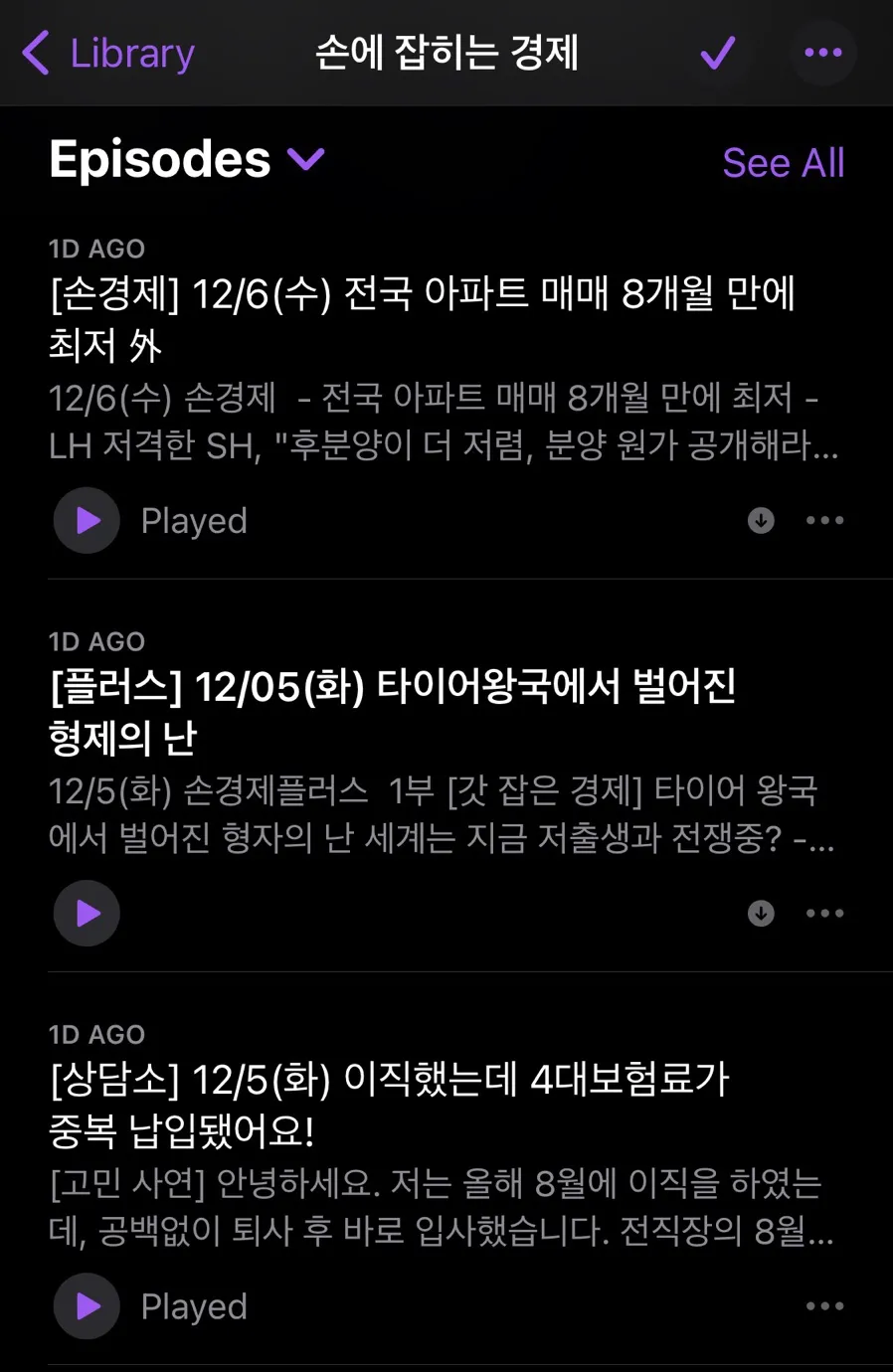
Sone Japineun Gyeongje!!! It’s become my fixed routine for showering after work! Lee Jin-woo’s Sone Japineun Gyeongje is so interesting and informative, it’s great to listen to casually while showering. Various episodes are uploaded within the Sone Japineun Gyeongje Universe channel, but I usually listen to the [Sone Japineun Gyeongje] episode uploaded in the morning. It discusses fresh economic/social issues every day as if chatting, and most importantly, it explains things so clearly that it really sticks in your mind!
[Weekend Routine]
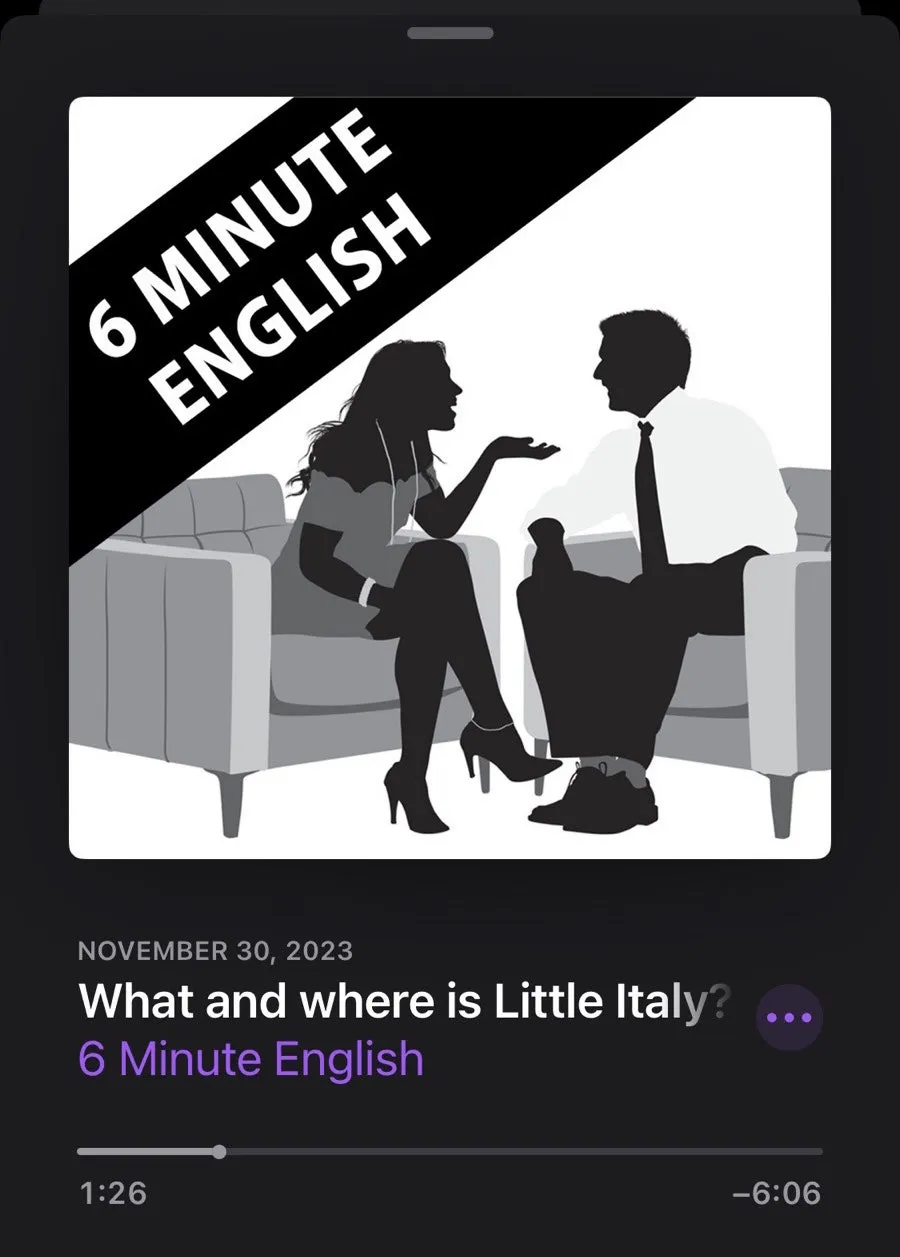
📌 6 Minute English
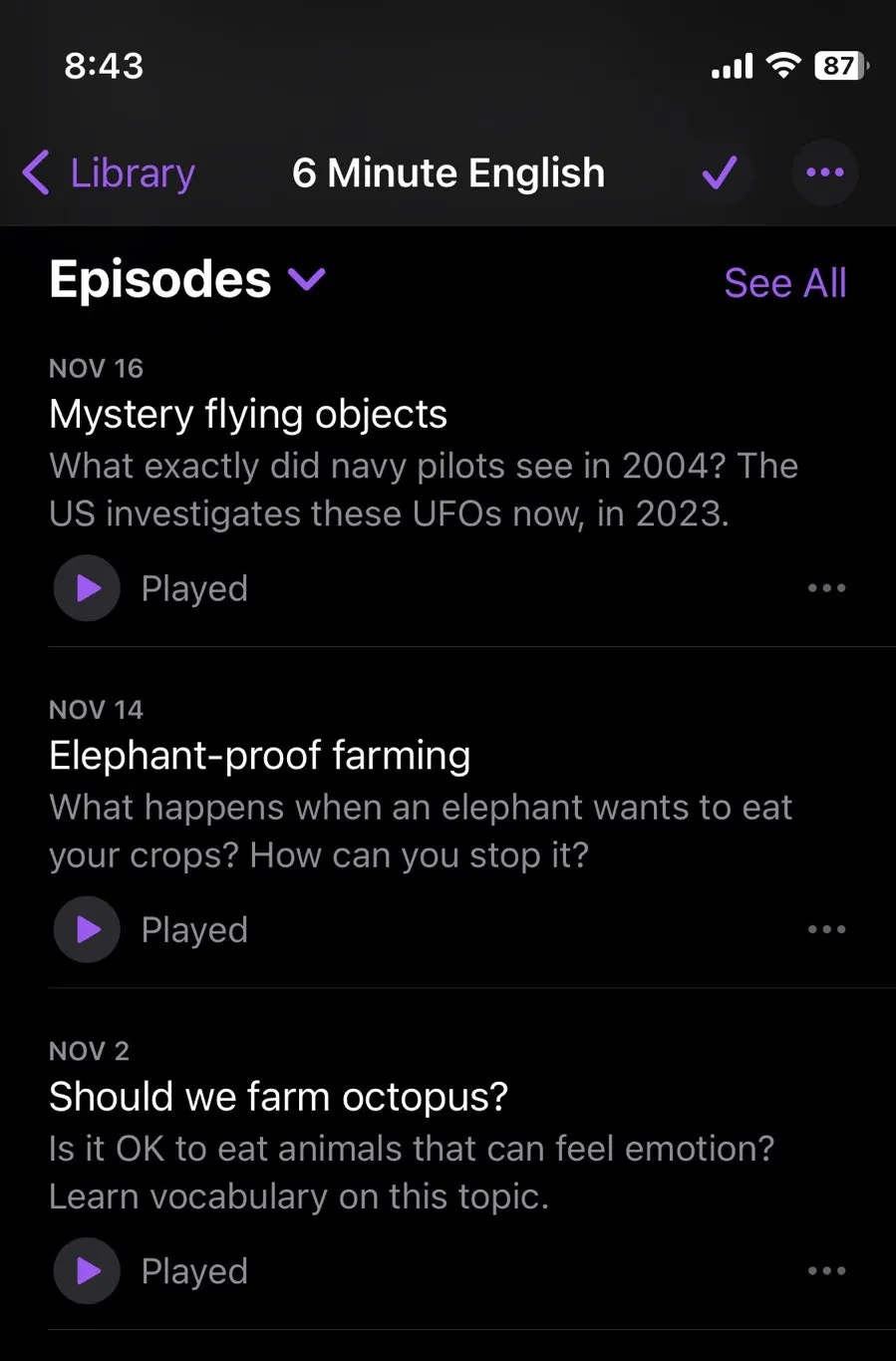
BBC Radio’s content, 6 Minute English. I personally love it because of the crisp British accent. When I attended a British international school in elementary and middle school, I also had a British accent, but it completely disappeared in high school… However, it sometimes pops out ㅋㅋㅋ (I can still imitate it quite well, but my speech slows down). One episode is uploaded every Thursday, and it unfolds as a 6-minute chat between two speakers. The topics are incredibly diverse, and it’s tailored to English learners with quizzes. It might be a bit childish, but it’s thoroughly entertaining and informative!
The topics,,,, so cute,,,,,<3
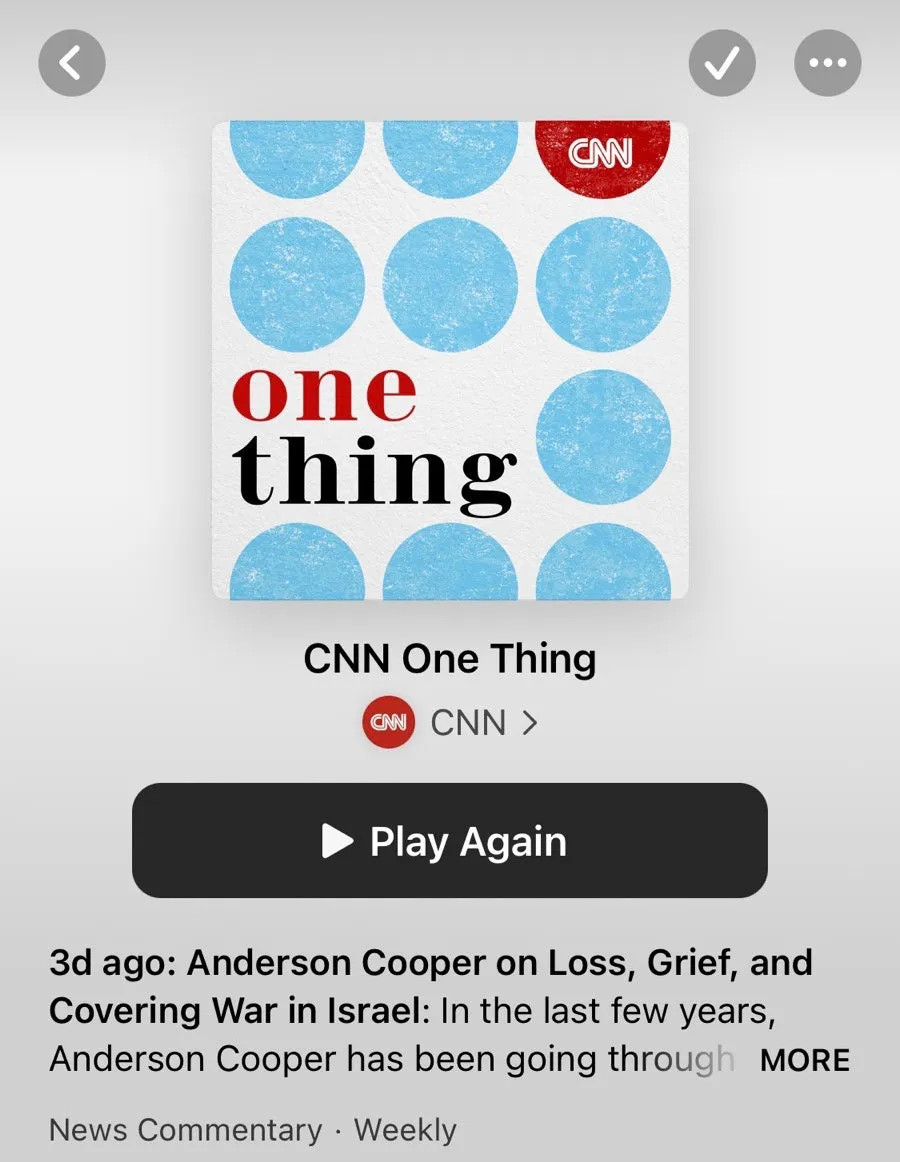
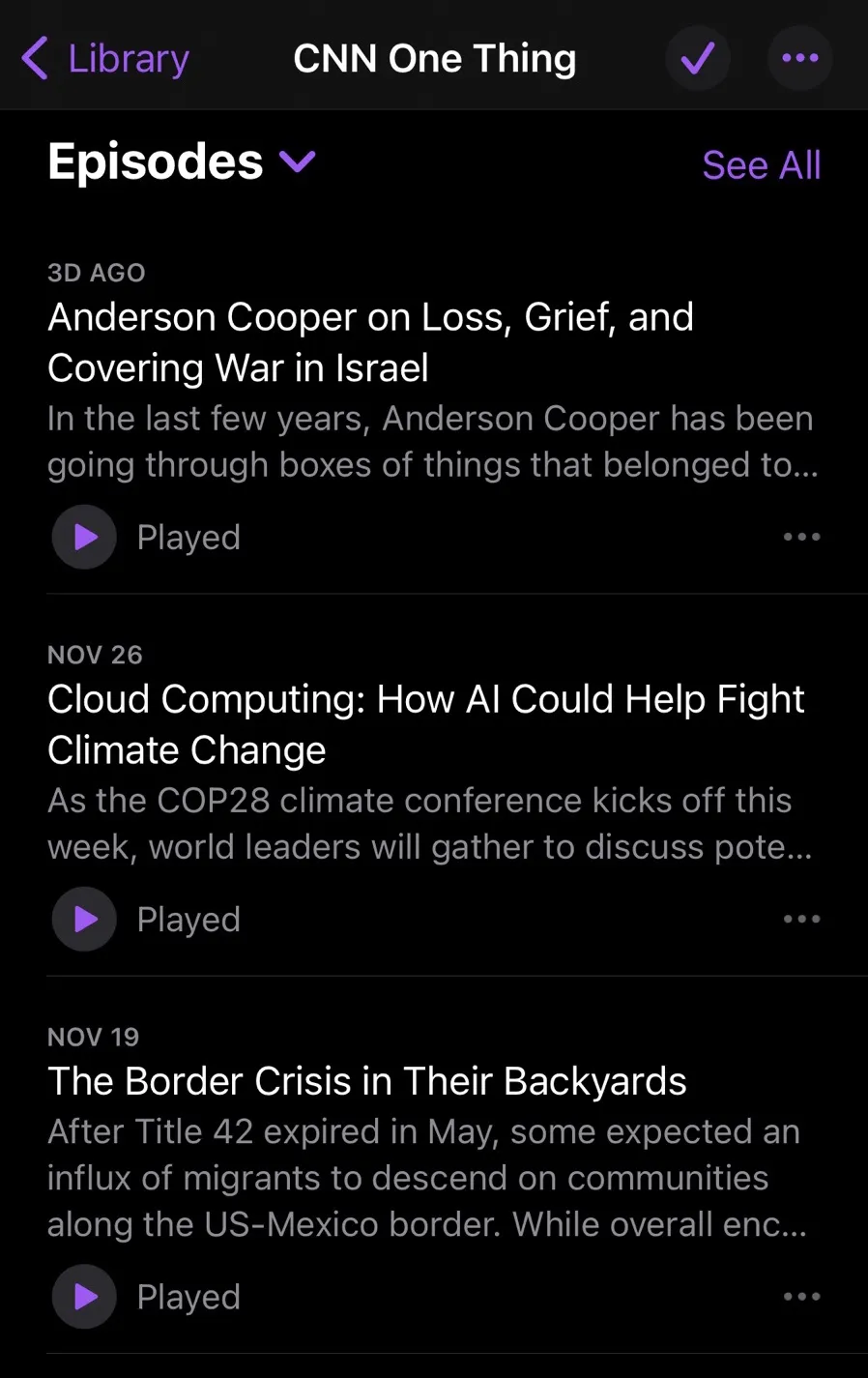
📌 CNN One Thing
CNN’s One Thing, with one episode uploaded every Sunday (US time). As the title suggests, it’s a broadcast that deeply explores a single topic. It’s a bit like,,, Chujeok 60 Bun (a Korean investigative journalism show),, though much shorter at 15-20 minutes. It covers recent hot issues and includes many interviews with relevant experts/officials, which is a great help for listening to various forms of less-polished speech.
📌 Korea Herald Podcast
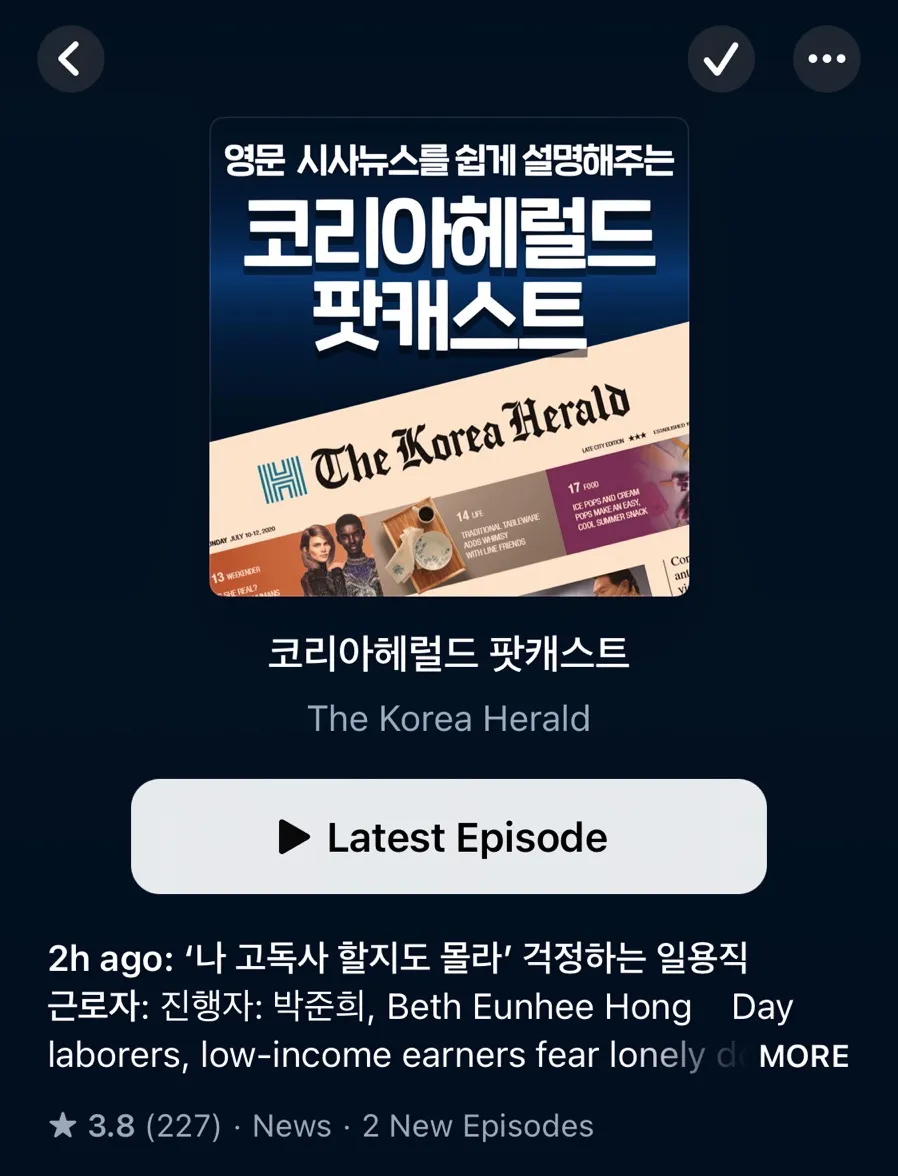
This podcast is uploaded 1-2 times a week by The Korea Herald. It reads English current affairs news, interprets it, and easily explains English vocabulary. When you’re too lazy to read articles, it’s a great channel to just put on to grasp the context and review English words/expressions you usually get confused by. It’s perfect for listening to on weekends when you have free time or when you’re out driving.
Writing all this out, it seems I’ve utilized podcasts quite effectively..! Living in Korea and working for a domestic company, there are almost no opportunities to encounter English.
By integrating this podcast routine into my daily life, I’ve grown closer to English, it’s become a training ground for listening and speaking, and I think it unconsciously helped me a lot with the summary interpretation test, which is the second part of the interpretation grad school entrance exam.
Well then, Bye! ✨