I'm absolutely crushed by that weight.
📖The power of poetry_Seo Kyung-sik
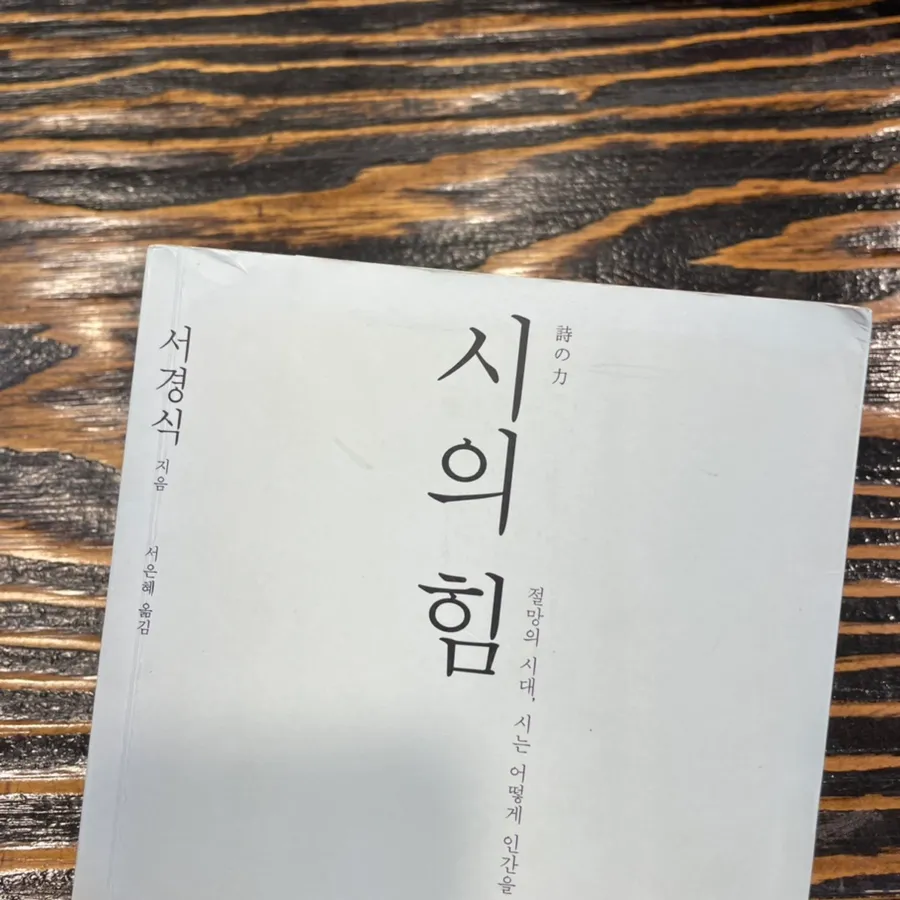
Author Seo Kyung-sik is a Korean resident in Japan.
He is more fluent in Japanese than Korean.
Since I was young, I often felt servile and deceived myself.
His two older brothers visited their homeland with excitement.
He was wrongfully accused of being a spy and was imprisoned.
In the land of Korea under Japanese colonial rule
I only thought about the people suffering,
I have never imagined the suffering of Korean-Japanese living in Japan.
I realize once again how narrow-minded I am living.
This feeling of being overwhelmed by the power of literature is amazing.
I keep getting greedy for books.
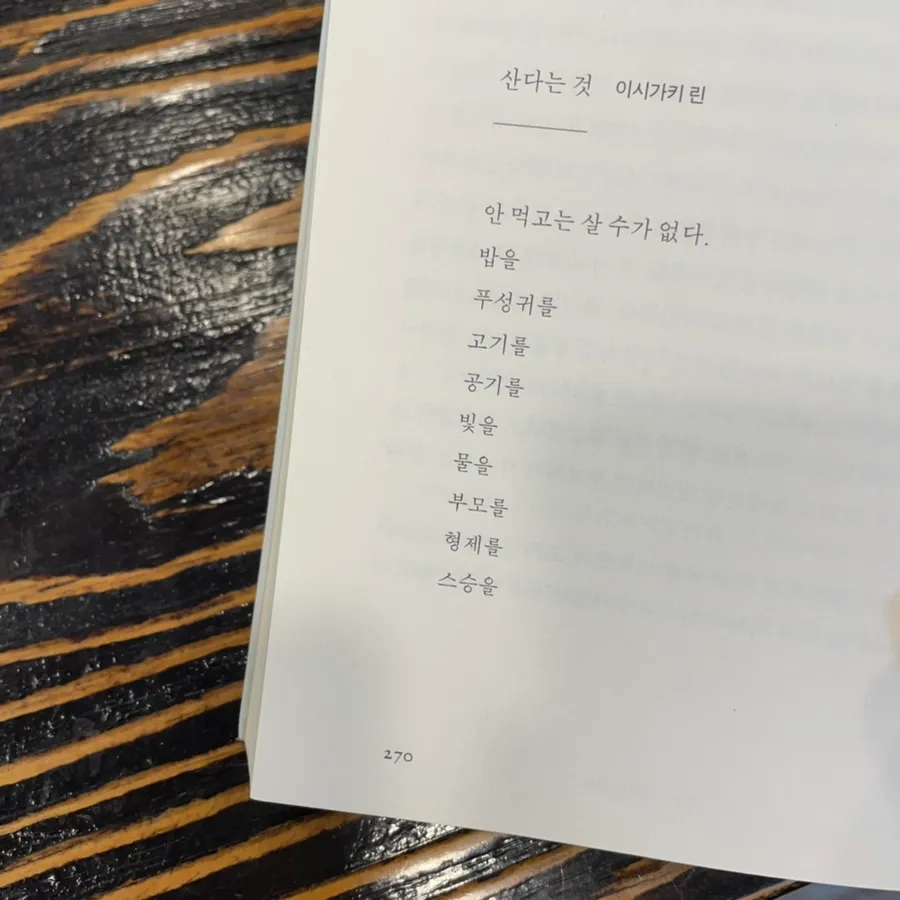
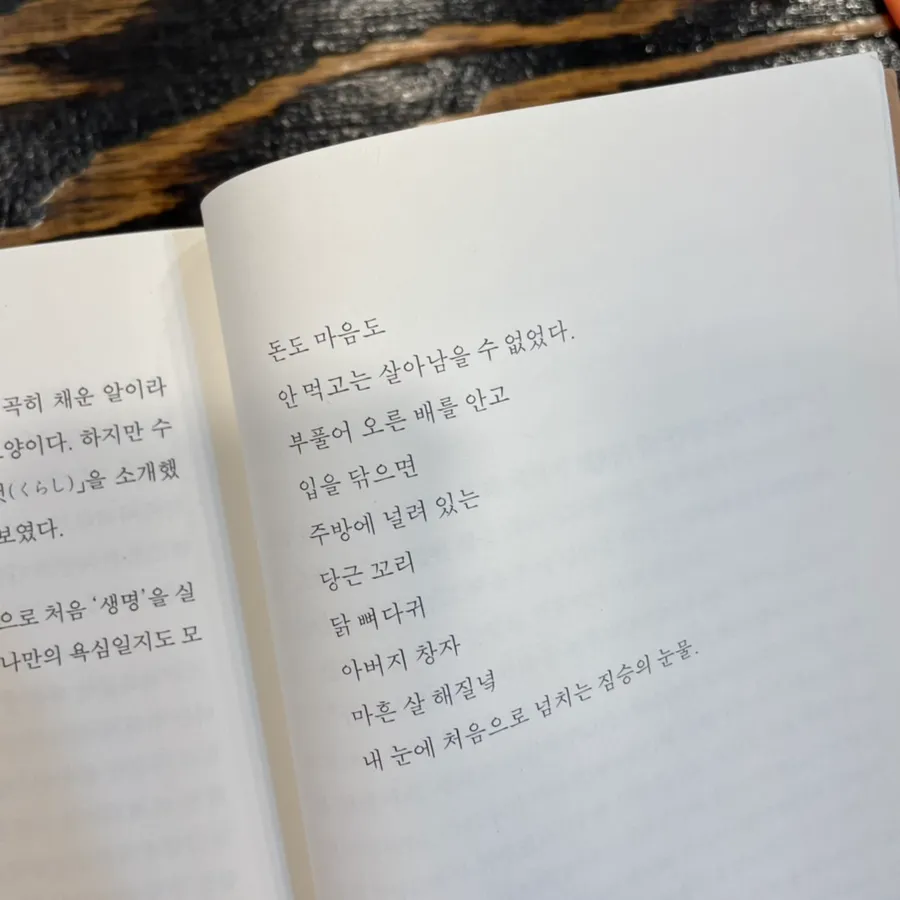
📝Thoughts and sentences I liked
pg.13
I hold a book of thin poetry in my hands and feel the weight of it.
pg.25
By writing this work, I could not wash away my abject guilt, but I was able to objectify it and gain mental stability, albeit temporarily. It goes without saying that objectifying oneself in this way is one of the important functions of literature.
pg.31
But I couldn’t help but think that there must be someone, somewhere, who would read this poem and sympathize with it. That too is an element deeply ingrained in the act of ‘doing literature.’ People who work in literature constantly address not only the readers they see in front of them, but also unknown readers somewhere, readers they haven’t even met. In that sense, it could be said that I became a ‘literary’ person at this time.
**
pg.46
Sand, how small am I
Wind, dust, loose, how small am I
How small is it really…
**
pg.123
I have a fresh scent all over my body
Amidst blue laughter and blue sorrow
I walk all day with a limp. Perhaps the spirit of spring has caught me.
But now - the fields will be taken away, and even the spring will be taken away.
< Will Spring Come to the Stolen Fields? Lee Sang-hwa
pg.153
There was a widespread perception that a poet was someone who could sense the signs of oxygen deficiency that was suffocating the people of his time before anyone else, and who must say what no one else could say and must not remain silent even when everyone else was silent.
**
**
pg.194
Even when it comes to his mother, an educated son like me may have been exercising his privilege of ‘interpretation’, so to speak. I am only interpreting one part of what my mother really wanted to say, and I am left with the uneasy feeling that I am only representing what is convenient.
When humans with the power of knowledge translate the words of uneducated people into text or speech, they exercise the privilege of ‘interpretation.’ Moreover, the party receiving the interpretation cannot even correct or criticize it.
pg.198
I blurted out the words, and sometimes I made up my mind and read ‘Japanese’ instead of ‘Korean’. Then, most of the time, not only my friends but also teachers and adults did not understand why I cared about such things. Rather, the response is to tell people not to waste their time on such things.
pg.240
In the mind of this old knight, ‘hometown’ is the object of nostalgia ingrained in him as a child. However, there is still a strong conflict between that nostalgia and the memory of the experience of discrimination as a colonial subject. To him, hometown is nothing but a divided and contradictory image. Moreover, upon returning from that contradictory ‘hometown’, I found that my ‘homeland’ had been divided into two and were in conflict. Without knowing the circumstances, he was forced to belong to one side against his will and was abused for lacking ‘patriotic spirit.’
pg.242
Violence was used in the process of colonialism tearing people away from their hometowns, or in the process of tearing people away from their hometowns. In the process of putting these torn people back into the framework of the ‘nation’, the violence of patriotism was once again used.
**
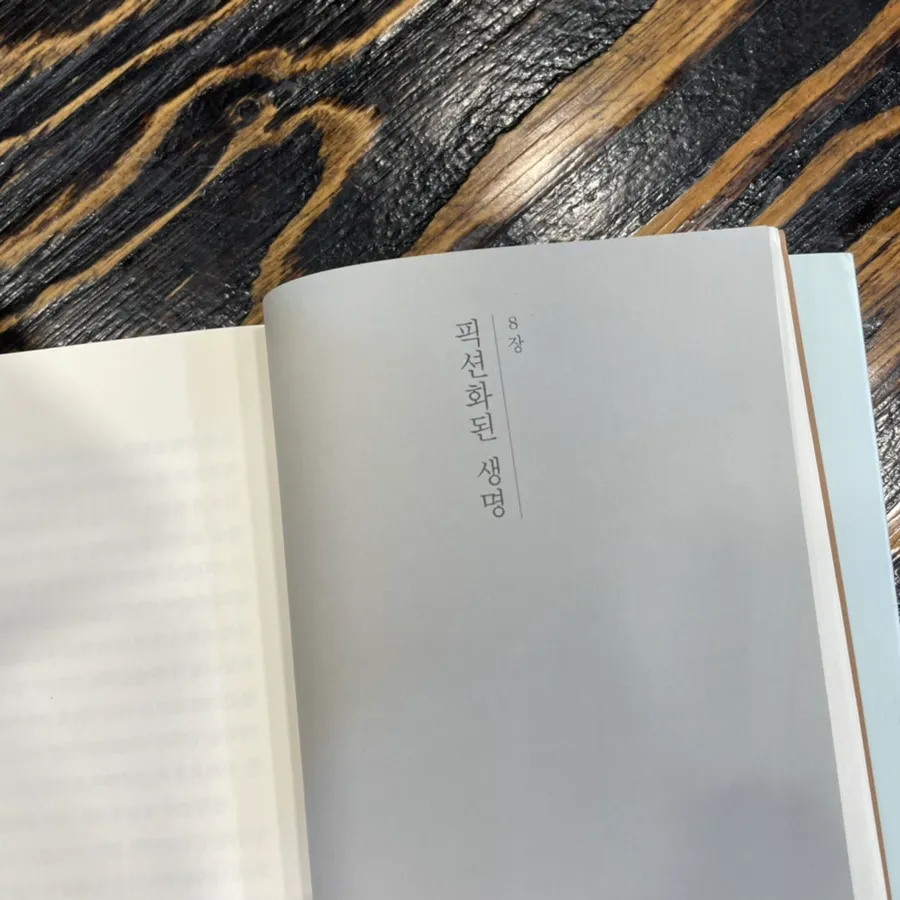
pg.268
For example, even if you like someone, you can’t say the direct and ‘stale’ line, “I love you.” By adding something like “I’m just saying…” after “I love you,” we secure the road owner who can say ‘this is a joke’ at any time. The emotion of ‘I love you’ itself is ‘fictionalized’. It is said that he protects himself by ‘fictionalizing’ reality.
pg.276
Although I am an ‘established poet,’ I have already published 30 to 40 books in Japan and Korea combined. To roughly categorize this, one is a review that deals with issues such as Koreans in Japan, minorities, colonialism, and war responsibility. The next group deals with literary ideas such as art and music. However, it was a free essay rather than an academic review. The third group can be broadly speaking ‘literary’ things, such as essays or personal stories with strong autobiographical elements. Personally, I have a soft spot for this third group, and I have been thinking that someday I would like to organize other areas and focus on the literary area. Of course, in reality, I got older without things going as I wanted.