Humans are simply baffling to me.
📖 No Longer Human_Dazai Osamu
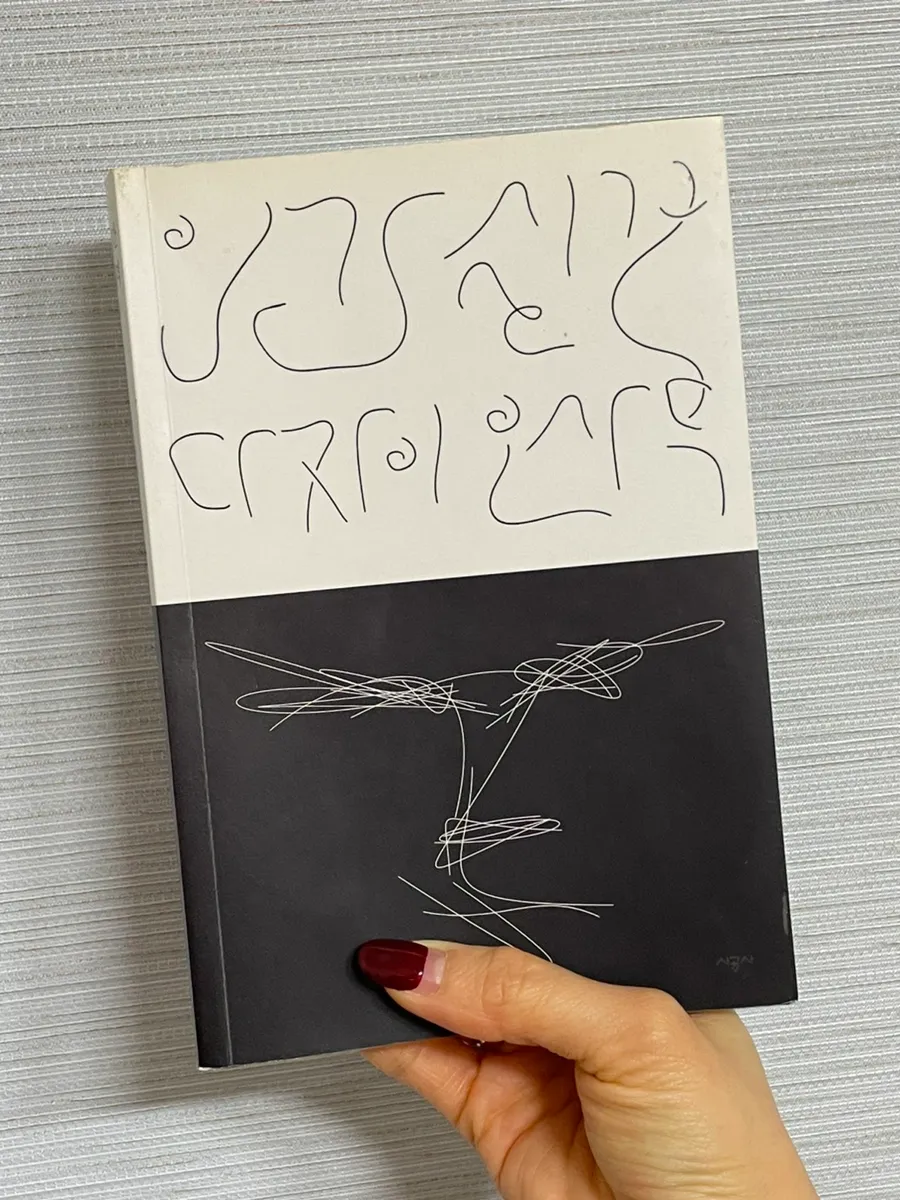
When someone asks me for a book recommendation, Dazai Osamu’s No Longer Human is the first thing that comes to mind. No Longer Human is also known as a novel that’s like Dazai Osamu’s autobiography, so the famous Egon Schiele’s “Self-Portrait” would suit the cover well. The cover of the book I bought isn’t that particular artwork, but this illustration feels unsettling, like the subtle expression of the protagonist’s childhood described in the early parts of the novel. Yet, this unsettling and uncomfortable feeling I get throughout reading the novel is strangely comforting. The reason I recommend this novel to many people around me is similar: most of them reacted with, “I was surprised how similar the protagonist’s thoughts were to mine.”
I find myself nodding unconsciously at the atrocities committed just to live as a human, and I feel a little ashamed of myself for often hiding my true feelings and acting like a clown. I also wonder if it’s rude to even attempt to embrace the inherent complexity of being human in the first place. The only truth we, as humans, need to remember is what the novel says at the end: ‘Everything simply passes.’
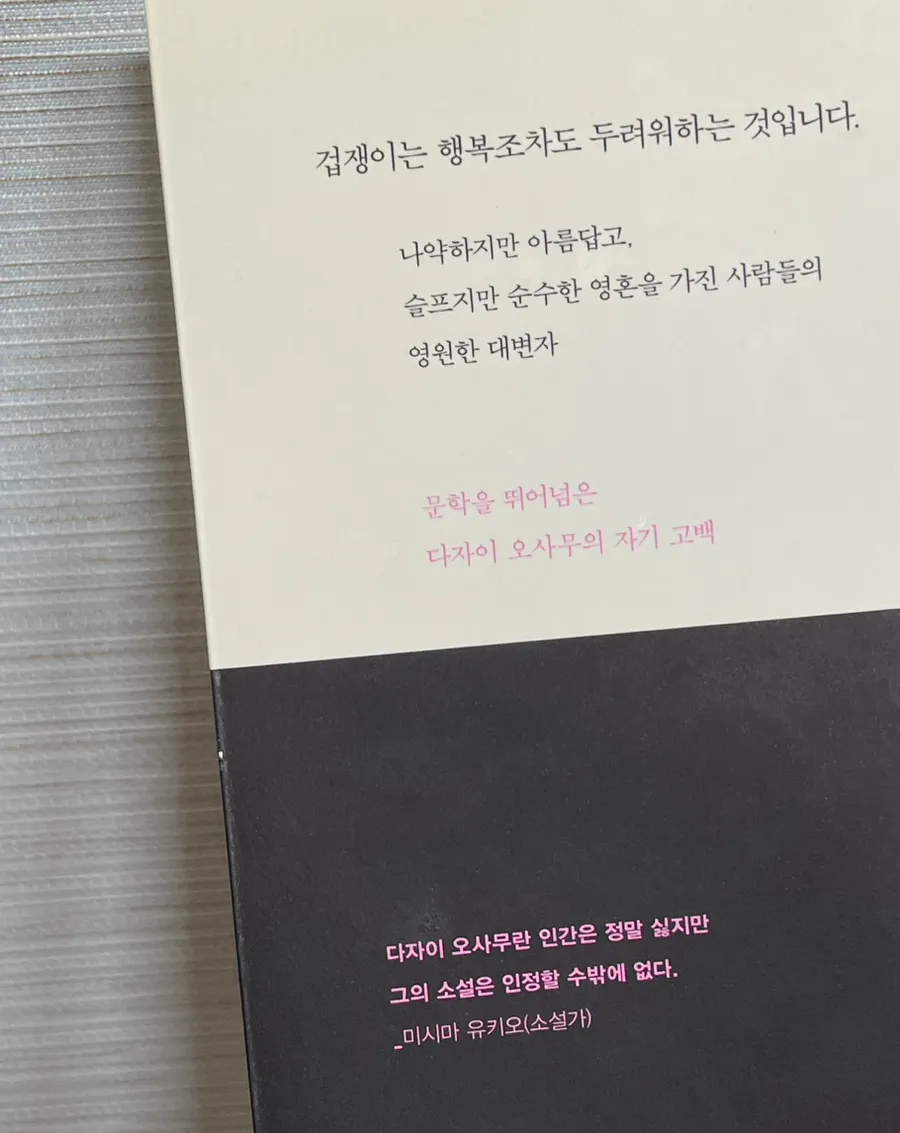
📝 Thoughts and Sentences I Liked
pg.26
I could not hold the slightest hope for the method of appealing to humans.
Whether I appealed to my father, my mother, a police officer, or the government, in the end, those skilled in social maneuvering would only offer excuses that would barely pass in the world. It was obvious they would inevitably be biased. There was no point in appealing to humans anyway. I thought I had no choice but to hold it all in, unable to speak a single truthful word, and continue my clowning.
pg.28
I have little interest in the morality, the sense of justice, or whatever else appears in textbooks on proper living. Rather, it is humans who deceive each other yet live brightly, cheerfully, and with apparent confidence in their ability to do so, who are simply baffling to me. People never taught me such tricks. If I had known them, I wouldn’t have feared humans so much, nor would I have performed such desperate clowning services. I wouldn’t have experienced this hellish suffering every meal, constantly at odds with human life.
pg.38
Women seemed more receptive to clowning than men. When I performed my clowning, men wouldn’t keep laughing indefinitely. Moreover, I knew well that overdoing the clowning for men always led to mistakes, so I always tried to stop at an appropriate point. But women had no such appropriate point; they demanded endless clowning from me, and I would become utterly exhausted trying to meet their boundless encores. Indeed, women laugh so readily. It seems that, from the outset, women pursue pleasure more eagerly than men.
pg.55
Illegality. I found it quite enjoyable. In fact, it was more comfortable. The legality that prevailed in the world was terrifying (I felt something as powerful as a swamp there), its structure incomprehensible, and I simply couldn’t sit in that bone-chilling, windowless room. So, it seemed more comfortable for me to leap into the sea of illegality, swim, and eventually reach death.
There is a word, ‘eumjiin’ (person of the shadows). In the human world, it seems to refer to miserable losers or wicked people, but I feel as if I’ve been an eumjiin since birth. So, whenever I see someone pointed at as an eumjiin by others, a tender feeling arises in me.
There is also the word ‘guilt.’ I suffered from that consciousness my entire life in the human world, but perhaps it was a good companion to me, like a devoted wife, and living out my lonely days idly with it might have been one of my ways of life.
pg.66
Lonely.
That single murmur would surely evoke more empathy than a thousand complaints from women about their lot, yet it’s strange and peculiar that I’ve never once heard such a word from any woman in this world. Though that woman didn’t say she was lonely, she carried an intense solitude around her body like a one-inch-wide current. Being with her, my body would also be enveloped in that current, melting perfectly with my own thorny, gloomy current, allowing me to escape both fear and anxiety, like ‘a dry leaf fallen on a rock in the water.’
pg.108
I gradually lost my caution towards the world. I thought the world wasn’t such a terrifying place. The fear I had harbored until now was akin to being scared by so-called ‘scientific superstitions’: for instance, that hundreds of thousands of whooping cough bacteria float in the spring breeze, hundreds of thousands of eye-blinding bacteria lurk in public baths, hundreds of thousands of hair-loss-causing bacteria are in barbershops, scabies mites swarm on national railway train handles, or that raw fish, undercooked beef, or pork inevitably hide tapeworm eggs, flukes, or various other eggs, and that walking barefoot could lead to tiny glass fragments entering the soles of one’s feet, traveling through the body, piercing the eyeball, and causing blindness. Of course, it’s ‘scientifically’ accurate that hundreds of thousands of bacteria swarm around. But I also realized that if one completely disregards their existence, such facts instantly vanish into a ‘ghost of science,’ utterly irrelevant to oneself.
pg.147
I lay down, placed a warm hot water bottle on my stomach, and gave Tetsu a piece of my mind.
“Oh, come on, this isn’t Calmotin. It’s Henomotin.”
Saying that, I chuckled. ‘Ha-ha-ha.’ ‘Pyein’ (a ruined person) seems to be a comedic noun after all. To take a laxative just to get a good night’s sleep, and for that laxative to be called Henomotin!
Now, I have neither happiness nor misfortune.
Everything simply passes.
In the so-called ‘human’ world where I have lived until now in utter chaos, that is the only truth I believe.
Everything simply passes.
I turn twenty-seven this year. My white hair has increased so much that people usually take me for over forty.