Efforts for the Intangible.
📖Amuteun, Classic_Kim Ho-kyung
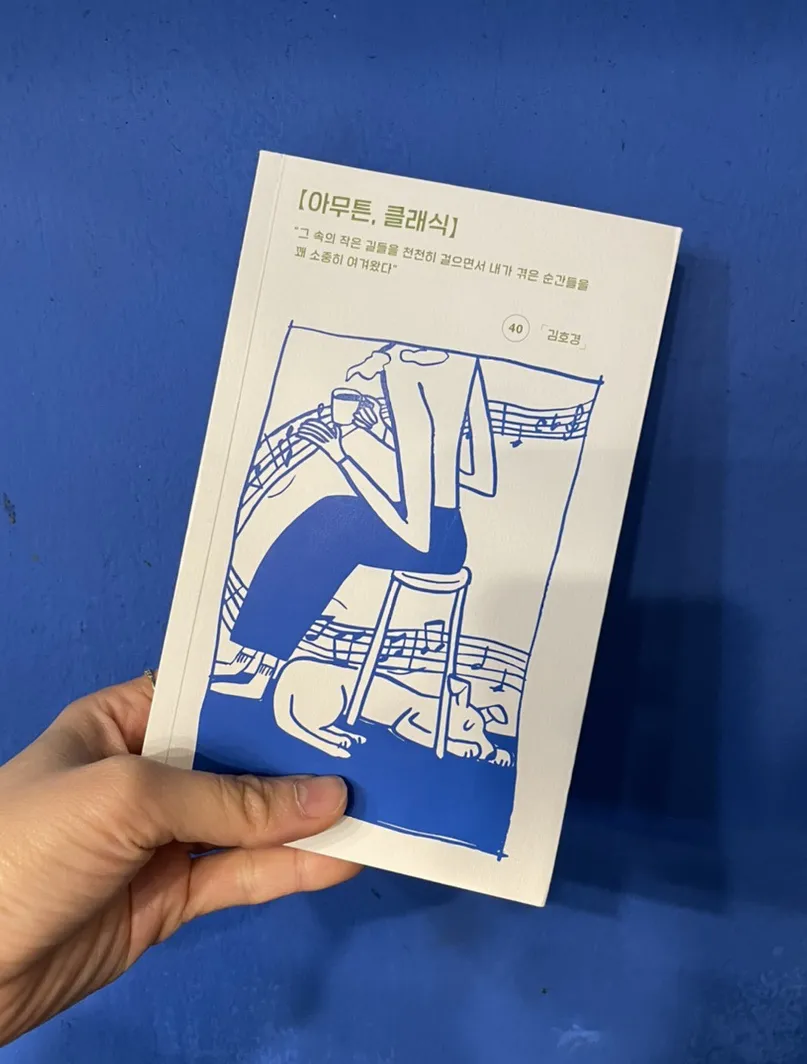
Browsing the bookstore, I quickly picked up a book from the
More than a story about classical music, this book is imbued with a love for music woven into every word. For an author who cherishes such feelings so dearly, they must surely be the kind of person who finds happiness more easily than others. My heart pounded throughout the read, feeling a kinship with someone so moved by something that is “truly nothing, yet absolutely not nothing at all.”
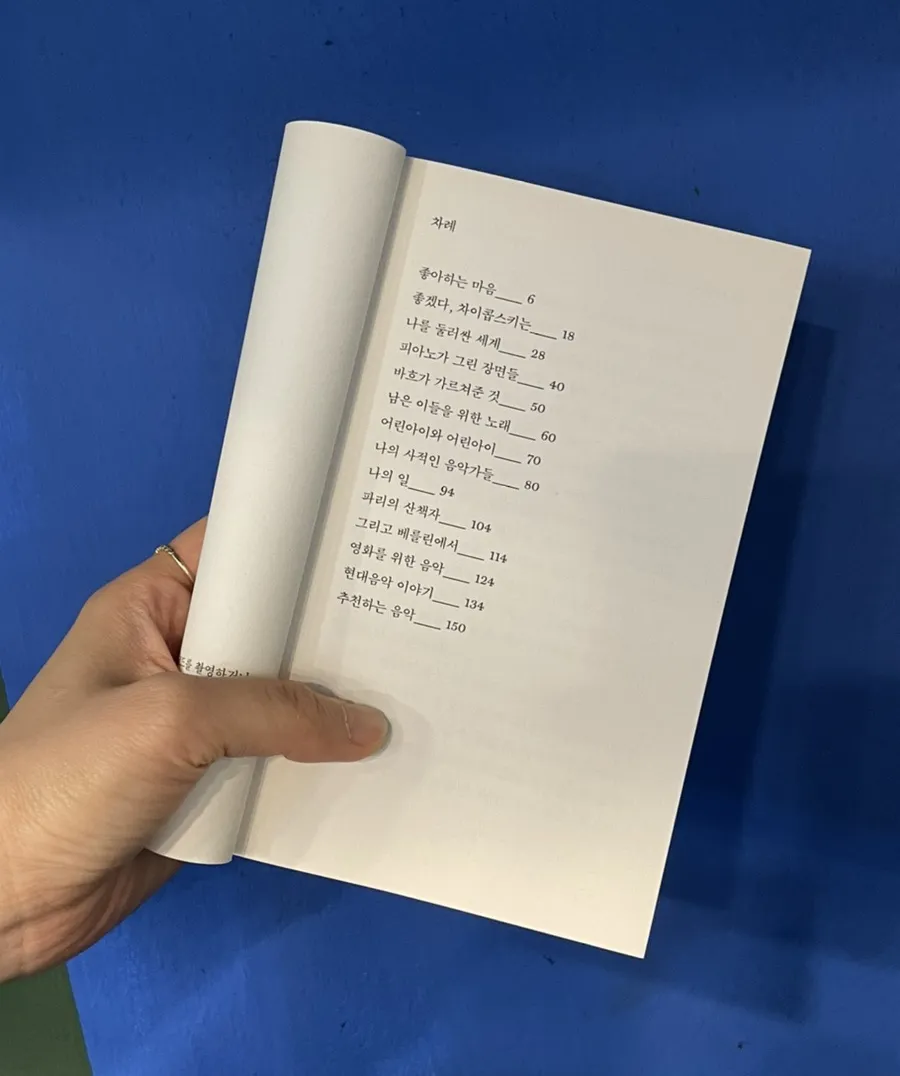
📝 Thoughts and Sentences I Loved
pg.12
The feeling of liking something seems to remain like a scene, mixed with reasons that even the owner of that feeling doesn’t fully understand. It’s hard to fully explain in words moments like bursting into laughter while smelling a pink paw pad, or the happy childhood memory of jumping around listening to Dad’s performance.
pg.17
Music is always new, and I, too, am constantly changing. Yet, somehow, a feeling once liked doesn’t easily change. Deciding to add something to a playlist is instantaneous, but letting it go always leaves a lingering attachment. Even though music isn’t a living being like a dog. In that it’s an art that can never be truly owned by any means, it sometimes feels as if the listener and the musical work share a special relationship. It can grow closer, become more beloved, or even become indifferent. Unless there’s a special reason, the relationship won’t completely break. I slowly recall the music I’ve shared my heart with at every moment of my life. I play the recordings, layering the sound images.
**
**
pg.21
Only then did I realize that the ingredients of music might not be laws or formulas, but abstract thoughts or concrete experiences. I learned too late that composition isn’t about learning and applying compositional formulas, but about one’s own story or sensation.
pg.33
I’m not sure what someone like Baek Jong-won could do, or in what way, for the classical music scene. Just as various popular menus are freely sold and created on one side, while ‘authentic’ cuisine continues to develop, I hope that creation, production, and consumption will also thrive in classical music. ‘Mister, one Bach Goldberg Variations, please.’ Just like ordering authentic Italian food from a food truck.
pg.49
Sitting in the audience, I rethink the music I see and hear, and its meaning. Music is truly nothing, yet absolutely not nothing at all. I want to consider it just music, but its absolute presence keeps making me assign meaning to it.
**
pg.59
Solitude loses its uniqueness the moment it is feared. While it’s truly not easy for anyone to be solitary anymore, still, from the hidden crevices of solitude, the language of art blossoms, and poetry is written on paper. (Omission) I want to live by placing question marks on more things, as if I’ve finally understood the meaning carried in a single note, or as if I’ve belatedly realized that a single star can change the order of the universe.
pg.98
Adorno’s argument has been understood and propagated by unfaithful scholars as ‘light music = popular music’ and ‘serious music = classical music.’ In fact, the correct interpretation is ‘light music = market-oriented music’ and ‘serious music = music that delves into the creator’s inner self.’
pg.101
I live with the heart of a musician, though I am not one. I ponder like a poet, though I am not one. A healthy day is incredibly precious. I intensely dislike writing that seems self-absorbed, but I think it’s okay to gently comfort a piece of writing that was safely and well-written without being too sad, even if belatedly. A healthy and safe day is truly precious these days.
pg.129
While doing something no one recognizes, I harbored a deep desire for someone to recognize me doing that unrecognized work.
**
pg.147
If there’s a saying like ‘beginner’s luck,’ I wonder if there are also terms like ‘intermediate’s pessimism’ or ‘despair.’ As I grew accustomed to my work as a reporter, I lost my beginner’s mindset. I was just barely getting by, rolling along like a hamster on a wheel with a compromising attitude and fatigue.
Moreover, the world of art has emotions like narcissism at its core. I gradually built up resentment towards a world of language intertwined with words like genius, self-absorption, and ecstasy. And eventually, I reached a state of nihilism.
The phrases I used most often during that period were ‘Do as you please,’ or ‘What difference would it make anyway?’, or ‘I don’t know.’ The efforts for intangible things like music, and the intangible results that came from them, along with the thought that ‘it wouldn’t make much difference no matter how hard I tried,’ fostered arrogance and cowardice within me. I quit my job, where I had never taken a long break, and passively attended graduate school, hiding the feeling that ‘I wouldn’t be able to do anything’ behind the words ‘I don’t want to do anything.’