Could Crying Be a Performance Too?
📖 Piano of Morning_Kim Jin-young
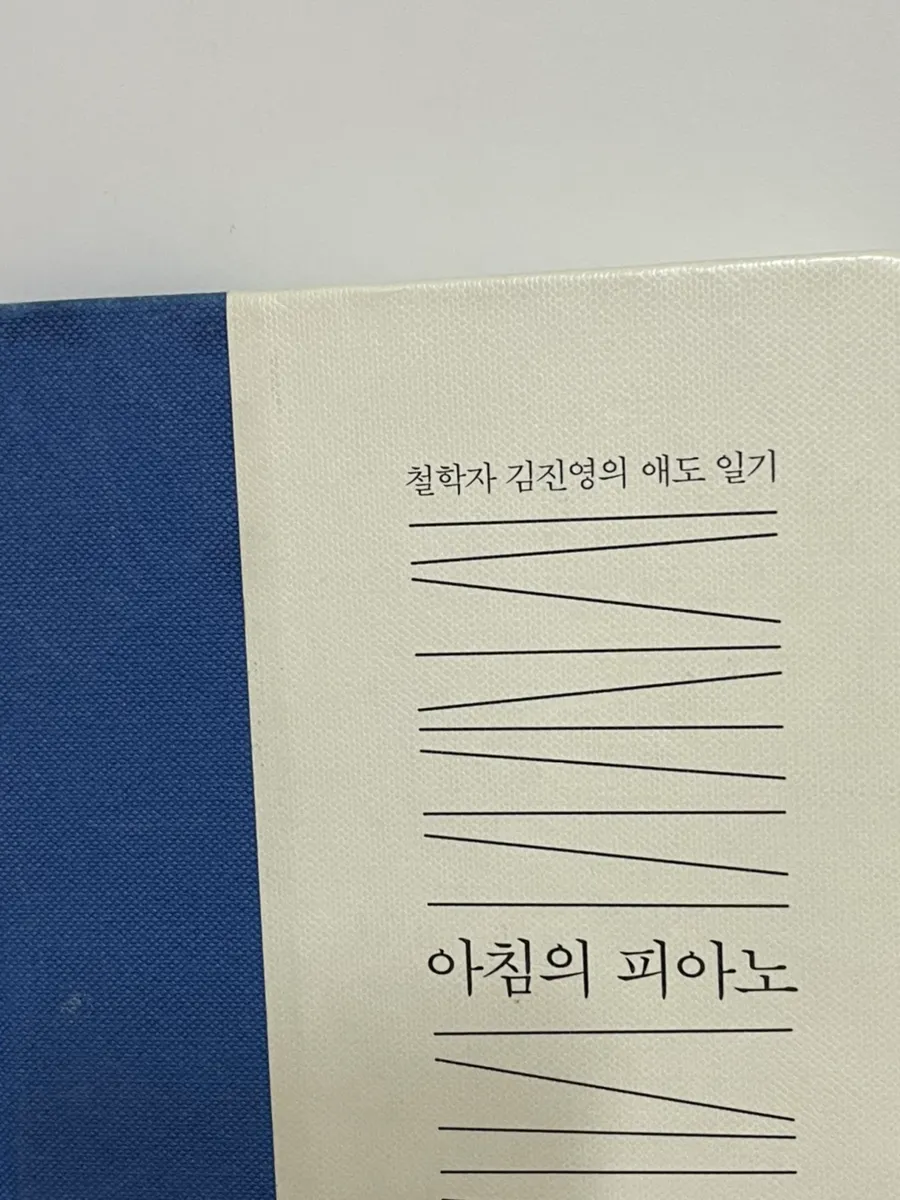
The author of
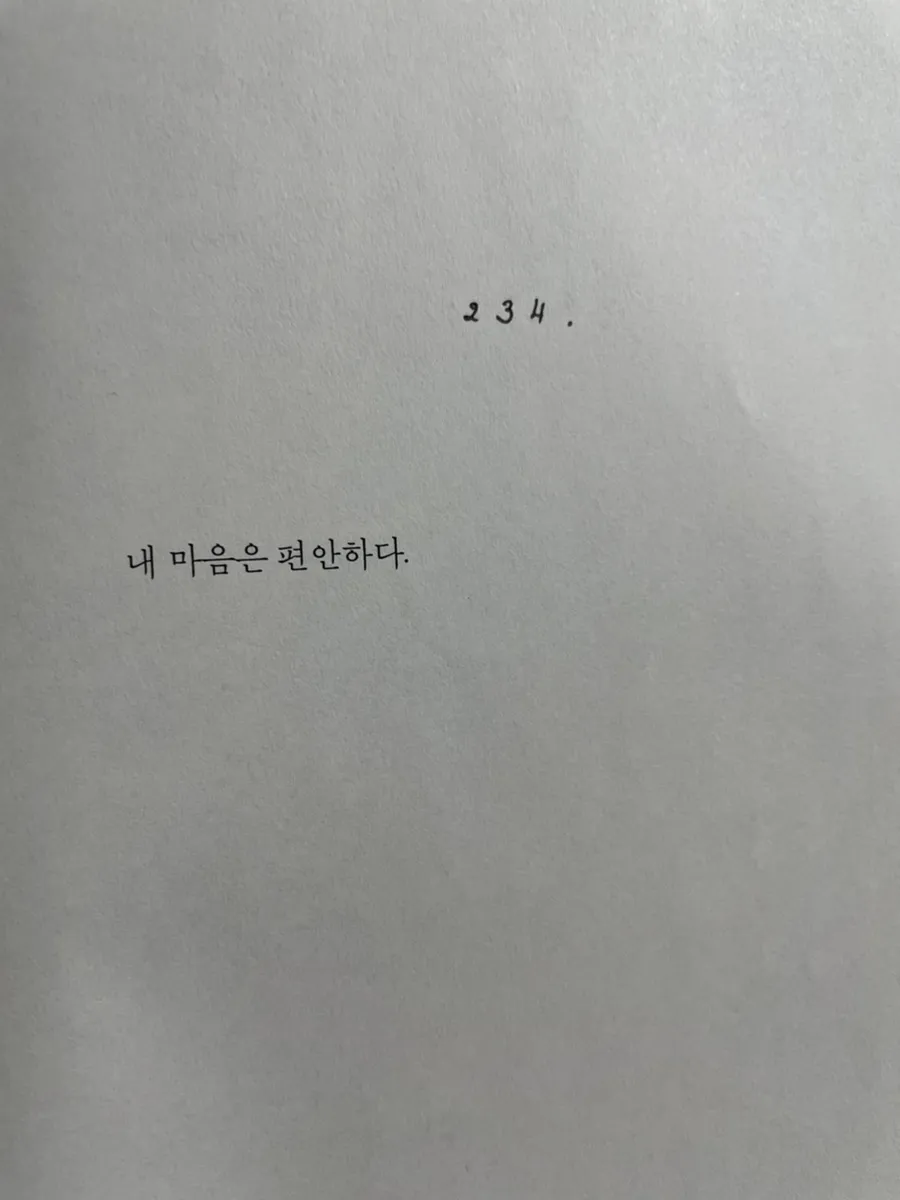
“My heart is at peace.” That was the last sentence he left.
I dare to hope that it’s a sentence I could write in my final moments.
📝 Thoughts and Sentences I Loved
pg.14
There is no need or reason to be sad.
Sadness is not for times like these.
pg.29
Now that the body I neglected has acquired a deep illness, looking back on my entire life, everything I’ve created and accumulated has been purely spiritual. Those things are now on trial. Can they protect my crumbling body and defend me against the illness? Now, my spiritual self must prove itself. Whether it is real or fake…
pg.44
Perhaps the human heart, too, originally flows to where it’s meant to go without any particular intention. But then, why do people and the world become so noisy, holding and containing so many intentions and meanings within that heart?
**
pg.74
Before my father passed away, he wanted to build a large study for me when I returned from my studies. Could this be that study? Shouldn’t I write a book here? Shouldn’t I write a book that only I can write, about all the things I loved, about me and my kind people, about the world I hated yet deeply loved? Could that be why I have now arrived at this downstream study?
pg.77
I watch TV.
Everyone lives as if everything will last forever.
pg.135
I wake up several times during sleep. In between, dreams pass like a stream. Dreams that have already flowed away and won’t return once I wake up.
pg.159
A year of destiny passes. The year goes, but destiny remains. I also remain. And the tasks that must be done between me and destiny remain.
**
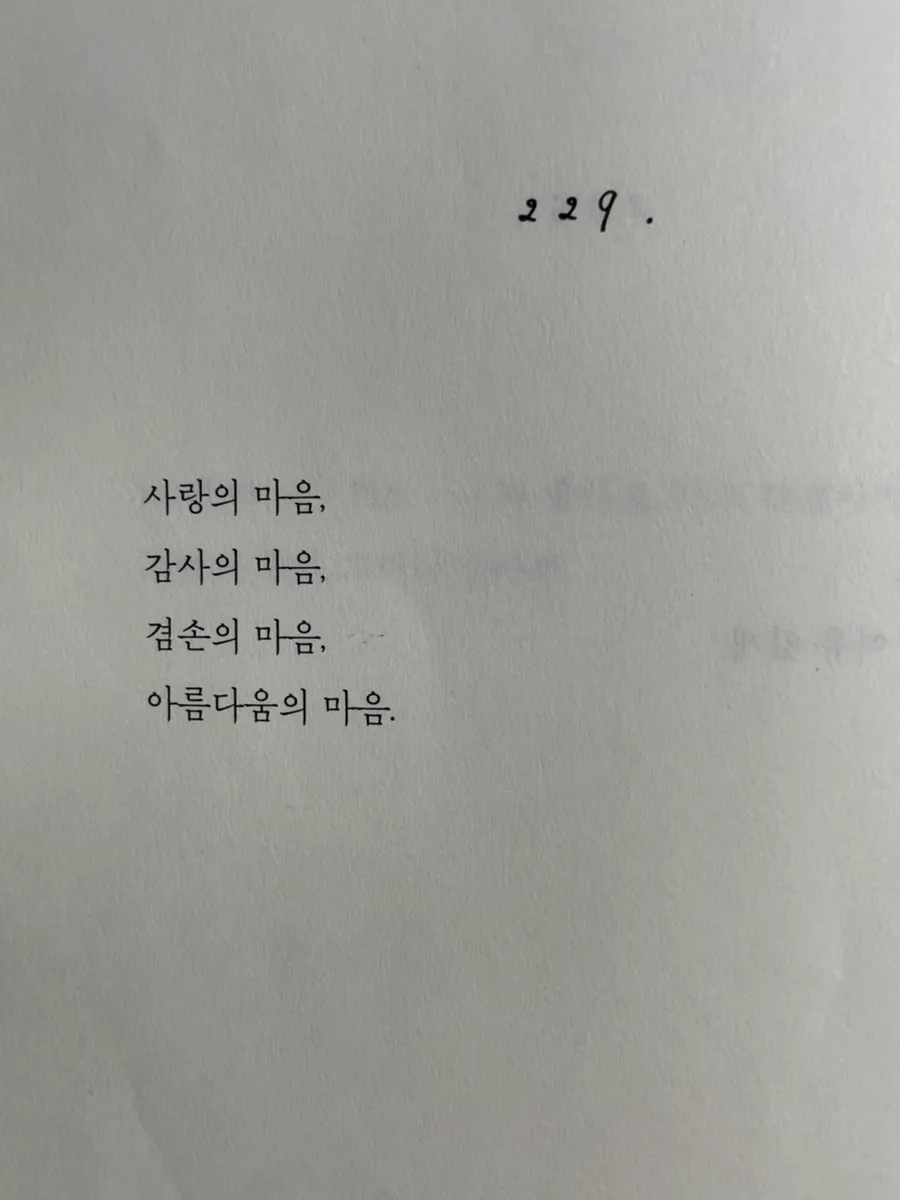
To preserve quiet days.
To never stop speaking of love and beauty.
pg.182
“How much further do I have to walk until I reach the temple?”
If you ask, the villager replies like this:
“Just forget about it and keep going. It’ll appear then…”
pg.197
Why do we remember?
It is to forget.
**
Why do we write?
It is to erase.
pg.208
Morning walk. Birds sit like musical notes on the power lines. The clear, empty sky after the rain looks like a blue score. If I look down into the depths of my heart, power lines are drawn there too. And hanging on them are not birds, but tears. Could crying be a performance too? If I truly cry now, wouldn’t those tears become musical notes like birds? Wouldn’t the falling tears become some kind of song?
**
pg.249
Illness makes one awaken from the concept of time. When I wasn’t a patient, I had no understanding of the 5-year survival rate for cancer patients that I often read about. I used to think, what does it matter if five years is too short or too long? Back then, the boundary of finiteness was distant, and time was merely an abstract length. But now, for me, time is no longer an abstract length. It is a concrete, experiential mass, weight, and depth. In other words, it is not conceptual but physical and sensory. Time is now existence itself to me.
**