A thin, light melancholy, like spoiled milk.
📖Quiz Show_Kim Young-ha’s Novel
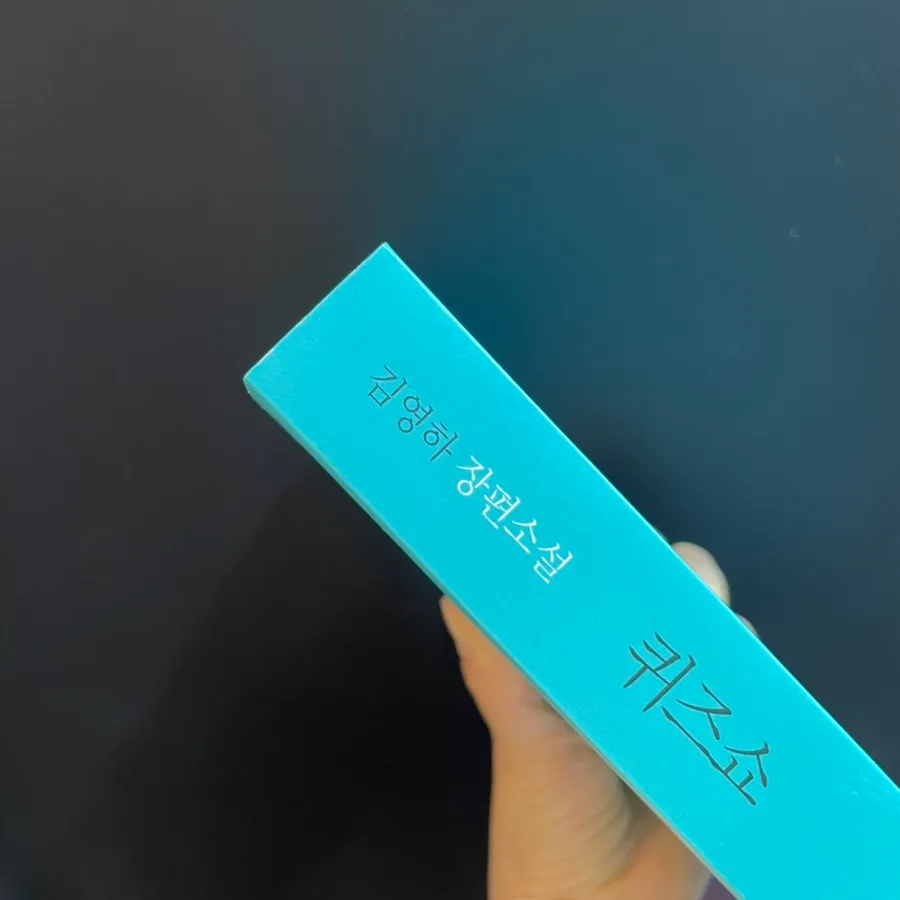
I read novels from time to time.
It’s incredibly enjoyable to read and savor descriptions that are more elaborate and delicate than those in essays and poems.
When I read, marveling at such relatable expressions and thinking, “Aren’t novelists truly geniuses?”, the story just flies by.
While reading Kim Young-ha’s Quiz Show, Netflix’s Squid Game strangely came to mind.
I don’t know if there’s any actual connection between the two, but it kept popping into my head throughout the novel.
When I feel like testing the limits of my imagination, the thought of writing a novel surges. I’ll challenge myself someday!
📝 Thoughts and Sentences I Loved
pg.79
“When you go into an expensive restaurant, the manager or waiter guides you to your seat, right? Haven’t you ever thought that was strange?”
“Well, isn’t it just for show? It looks cool.”
“There aren’t many good seats in a restaurant to begin with. Good things aren’t common, are they? In other words, most customers are dissatisfied with their seats. But if customers choose their own seats, the person who insisted on sitting there ends up bearing the brunt of the resentment. However, if the restaurant decides and seats them, at least they won’t resent each other over the seating. If they resent anyone, they’ll blame the restaurant. And you know what? Surprisingly, there are many people in the world who suffer from being unable to make a choice. They’d rather someone else decide for them. So, telling incoming customers to sit wherever they’re comfortable isn’t kindness, it’s unkindness. To alleviate the suffering of such people, an authoritative manager, dressed smartly, assigns the seats. Even an authoritarian command can sometimes be an act of kindness.”
**
pg.188
We were walking side by side, but when I suddenly looked over, there was a stranger. Our steps often tangled amidst the crowds passing on the street. We hadn’t yet learned how to walk together. A path that old lovers could have navigated without issue was arduous for us. The rhythm of our walking often faltered, and people swarming like schools of anchovies split us apart.
pg.195
This is how the poor become even poorer. They are ashamed of their poverty, and so they ultimately become poorer. To hide their poverty, they do ‘what everyone else does,’ incur debt because of ‘what everyone else does,’ and live as slaves to the world, paying off that debt.
**
pg.305
When I was young, if someone asked me about myself, I thought they were genuinely curious and answered with all my might. But looking back now, people were just blabbering whatever came to mind. If you just gave an appropriate response, they’d immediately move on to another question. It felt like talking to a cyborg programmed with only obvious questions. Such cyborgs, when they meet young, easygoing people, get by with just a few questions: “Aren’t you getting a job?”, “When are you getting married?” At times like that, I should have just thought about something else, but I always rambled on with things like, “I don’t necessarily think a job is essential. I’m still trying to learn more about myself. I think that’s the priority. Then, I believe employment will naturally follow.” Why did I do that? All those cyborgs wanted wasn’t a conversation, but just to pass the time.
**
pg.431
In Seoul, I used to start my day by going online as soon as I woke up. I’d log into messenger, search for news, and check emails. The world on the internet was always noisy and chaotic. Perhaps that’s why. In those mornings, a thin, light melancholy always clung to some part of my body, smelling like spoiled milk.
**
pg.442
They were nonchalantly gossiping, pretending to be calm, but I felt a dark, toxic energy slowly rising among them and seeping into my soul. It was like the anxiety one feels when awake alone on an overnight express bus speeding down the highway.